Remember that phrase from the old Monty Python TV series? John Cleese would say that after a comedy sketch finished to introduce…yet another (but different) comedy sketch. I’m going to borrow that concept this month as this will still be about nature, just butterflies instead of birds. Why? I blame this photo below that I took on this past September 8th at the Chatfield location of the Denver Botanic Gardens for sending me down a rabbit hole that I still can’t climb out of! As always, please click on the image to view larger.
Above - A Monarch Butterfly on a flowering plant showing an identification tag on its wing
So, what did you notice about that photo? A pretty butterfly? A pretty Monarch Butterfly whose numbers are dramatically dwindling by the year Monarch Butterfly? The piece of paper stuck to its wing? The wording on the paper? That was my progression of thoughts when I took the photograph although I didn’t notice the details of the tag on the wing until I saw the image on my computer.
Above - Notice the third “antenna” down on this Monarch Butterfly. It is actually called a “probiscis” that is normally rolled up unless the butterfly is eating as it does by laying the probiscis on the plant and getting the nectar through capillary action between the plant and the probiscis.
I noticed the tag said “Monarch Watch” and “mwtag.org” so I went to that website. I learned that Monarch Watch is a non-profit organization affiliated with the University of Kansas whose volunteers “tag” Monarchs from Canada, the U.S., and Mexico and monitor the migration patterns of these stunningly beautiful creatures. Monarchs migrate from as far north as Canada and wind up in either the same mountainous area of Michoacan, Mexico if the Monarch came from east of the Rockies or in California if it comes from west of the Rockies.
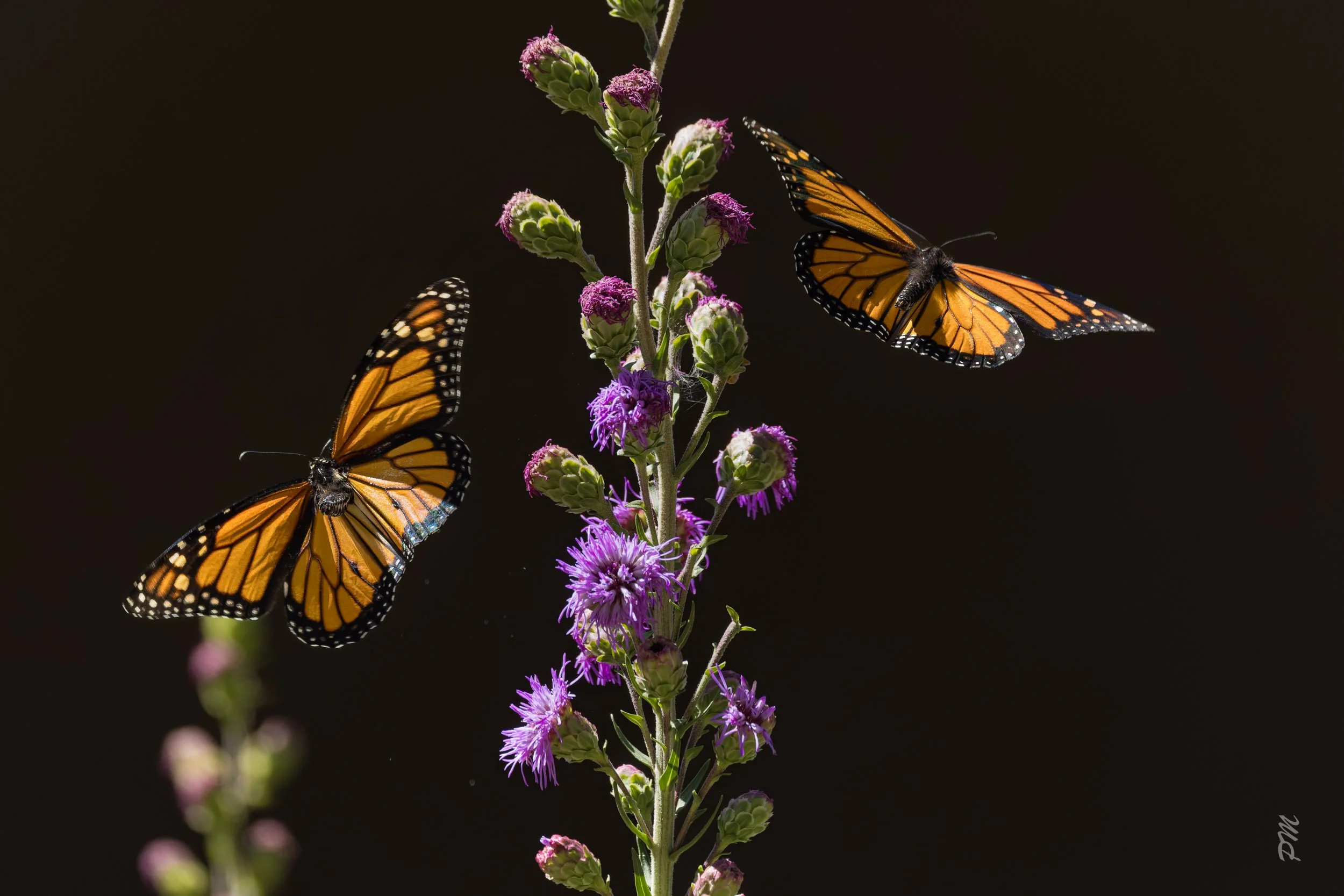
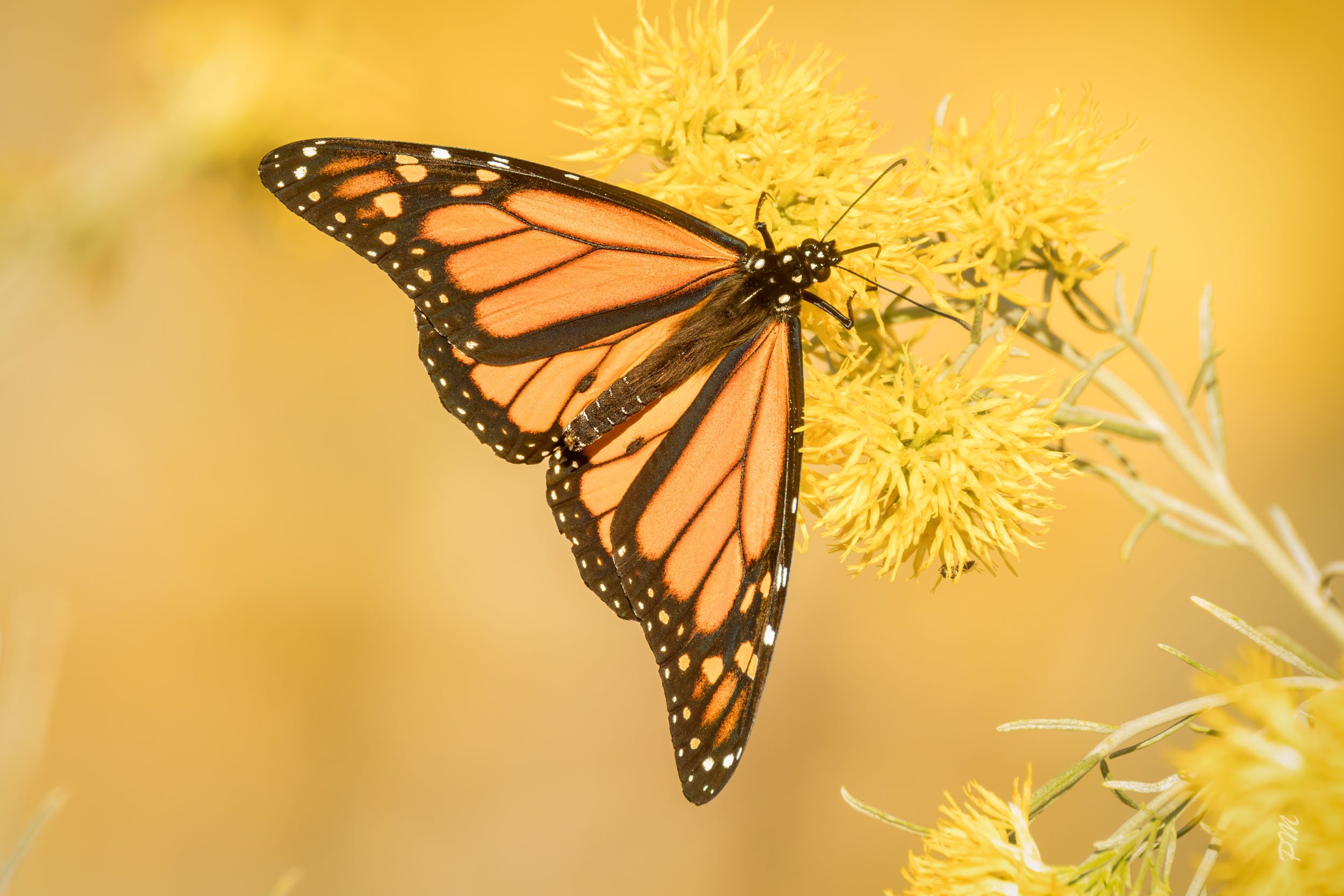
Above - All three Monarch Butterflies are male Monarchs. How can you tell? Two signs. One is the two black dots flanking each side of the lower body of the butterfly. Also, males are slightly paler in the color and the black veins. Contrast these three with the more vivid two above which are both female.
But my real education came the very next day after I took that first photo. I wanted to see if I could find more Monarchs at the Botanic Gardens (I did) but the best part came when I found a woman with a butterfly net in hand. I asked her if she was trying to catch a butterfly and she responded that she catches Monarch Butterflies to place tags on them for an organization called Monarch Watch! Her name was Nicola, a young woman who is trained as an entomologist and who works for Colorado’s highly respected Butterfly Pavilion. But that day she was there in her capacity as a volunteer for Monarch to catch and tag Monarchs. I showed her my photo of the tagged Monarch, and she looked it up in her journal, finding that she had tagged that one right there eight days earlier. She then very graciously took me on a lengthy, incredibly informative tour of the Gardens, pointing out eggs, caterpillars, and chrysalises of Monarchs, all existing on the underside of one plant and one plant only – the Milkweed.
Above - This is a Mo arch Butterfly caterpillar working its way around a Milkweed plant as it slowly dines on its leaves.
Milkweeds are toxic (except to Monarchs) and because the toxins get into their system, they become the liver/lima beans/broccoli/think of any other food you hate and insert it here food of almost all predators (sadly some spiders didn’t get the memo). She also told me about a book called The Language of Butterflies by Wendy Williams, a very readable book I devoured that was mostly about Monarchs. Ironically, a terrific article came out in a recent issue of Atlantic Monthly magazine that explained why the Monarch Butterfly is near extinction as a species due to prior agricultural government policies of Mexico, pesticides and insecticides, climate change, the popularity of guacamole during the Super Bowl (really!) and Mexican drug cartels (really, again!).[1] There is hope, though, as activists, governments, and citizen scientists like Nicola and others in Monarch Watch are combining to recently stem the tide resulting in slight upticks of numbers of Monarchs. Only time will tell if it’s too little, too late.
Above - I was initially confused by this butterfly I saw among the Monarchs. It looked somewhat like a Monarch but not completely. I researched and found out it’s called a Queen Butterfly. While primarily a tropical and southern states species, they wanderer in small numbers into states like Colorado during warmer months.
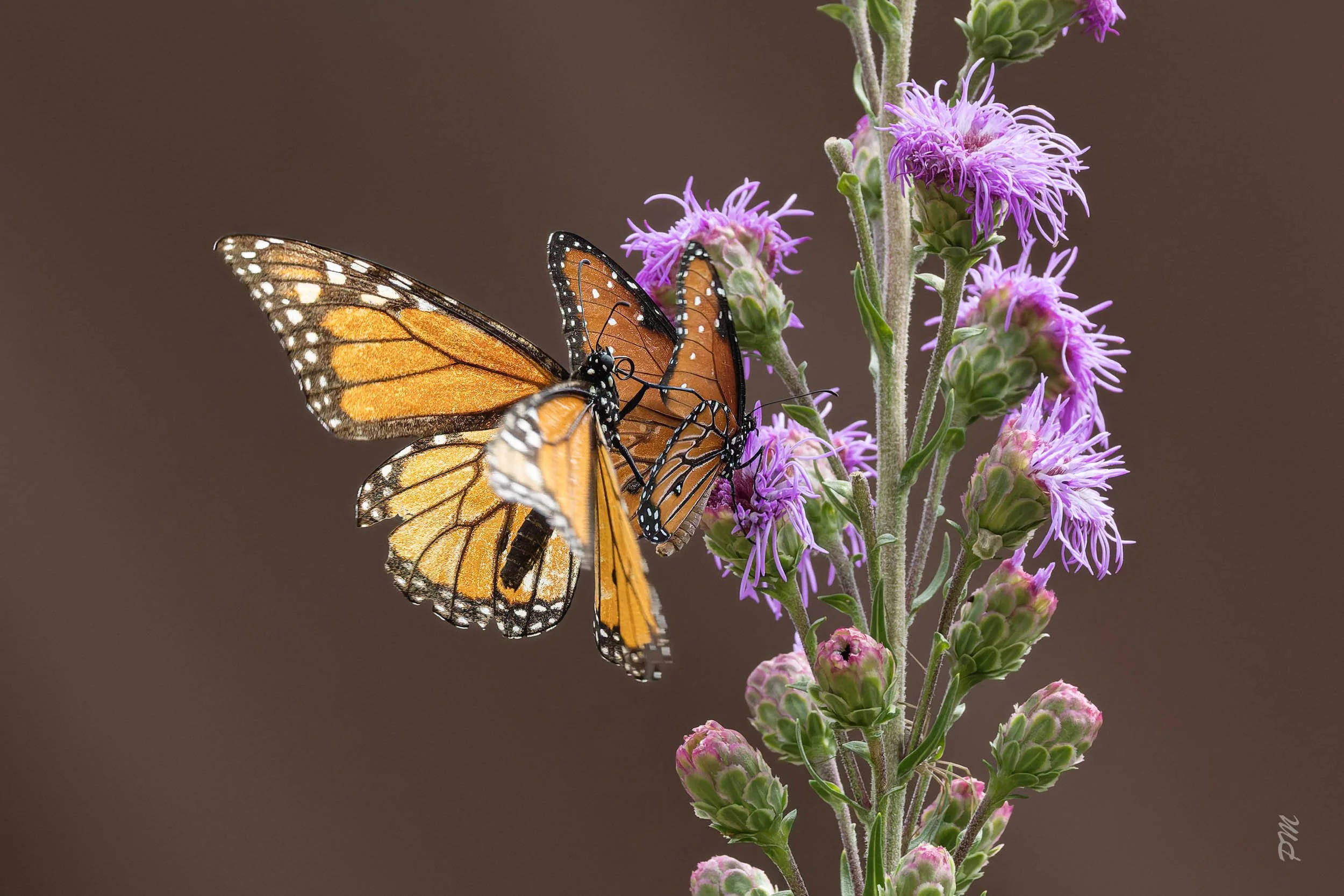
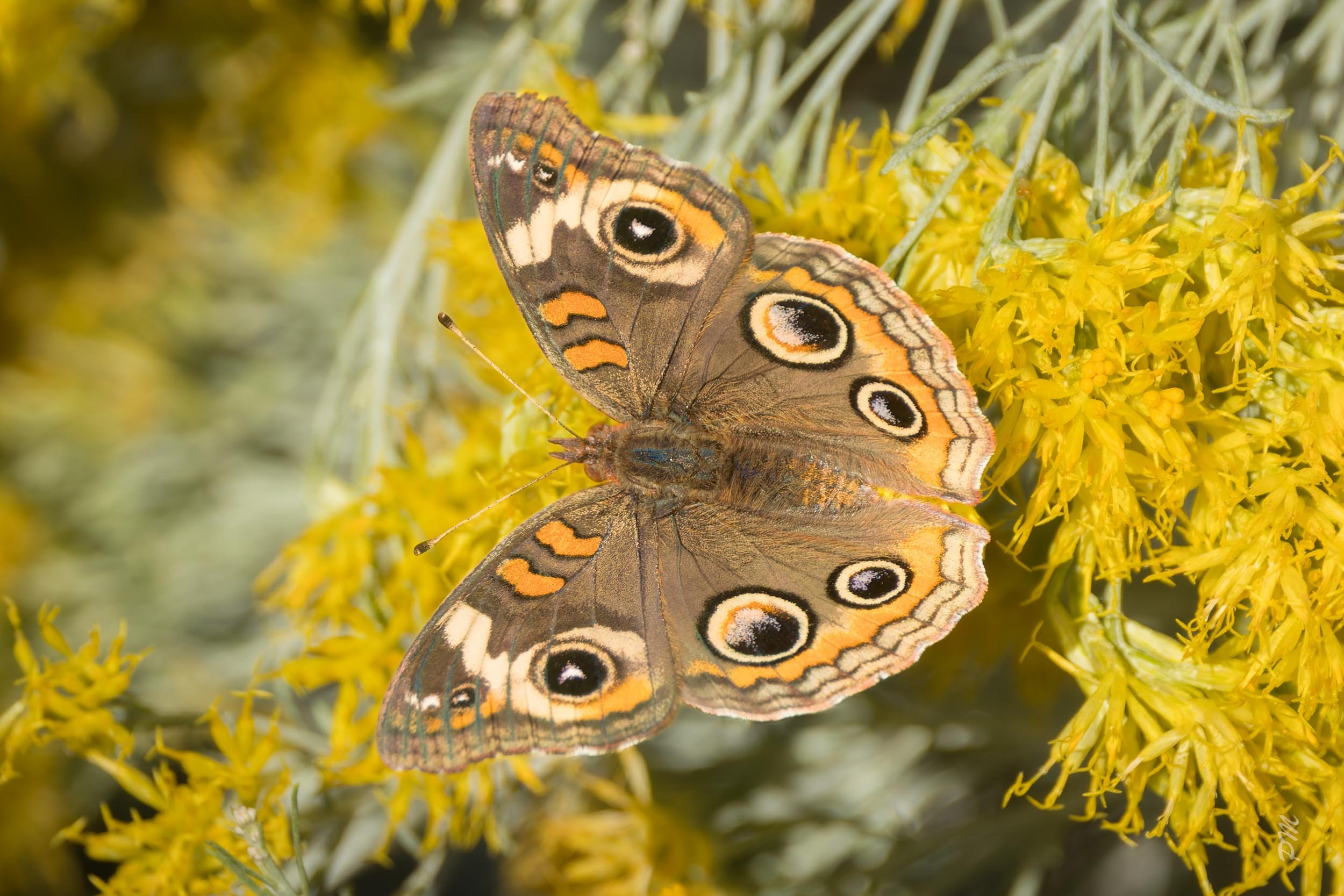
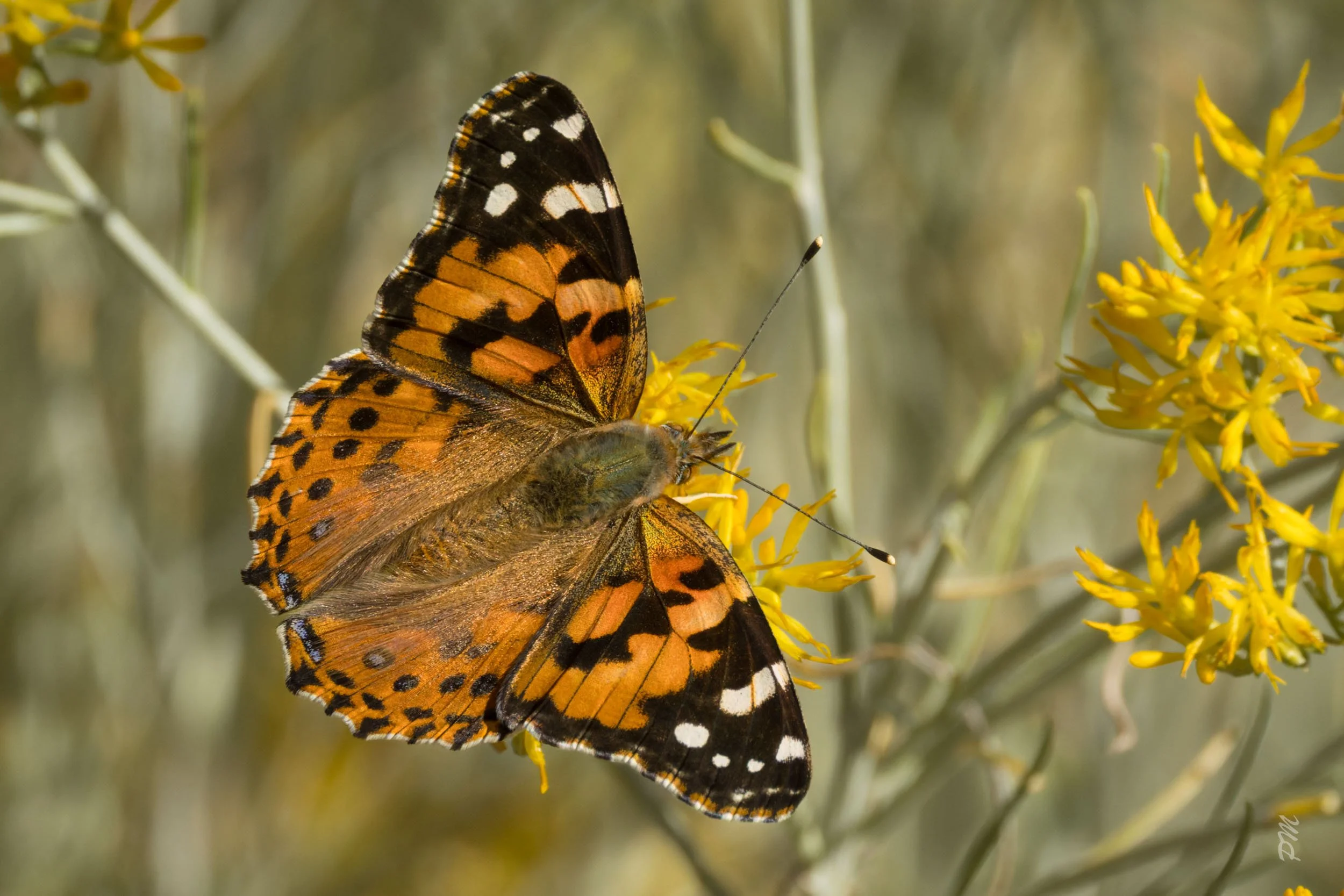
Above - Left panel - A Monarch Butterfly and a Queen Butterfly together showing how closely they resemble each other; Middle panel - a Common Buckeye Butterfly which despite its name is not common here; Right panel - a much more common Painted Lady Butterfly.
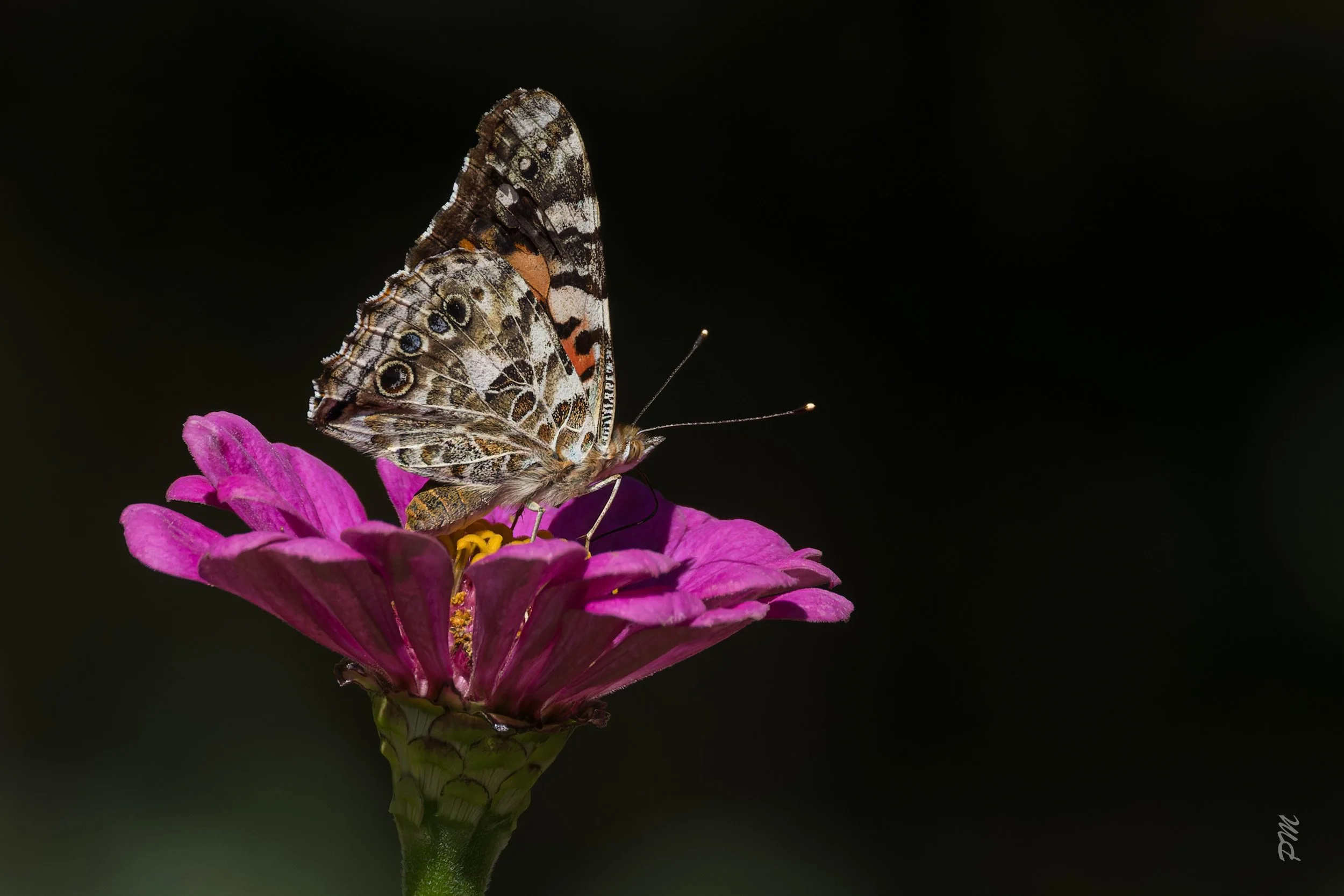
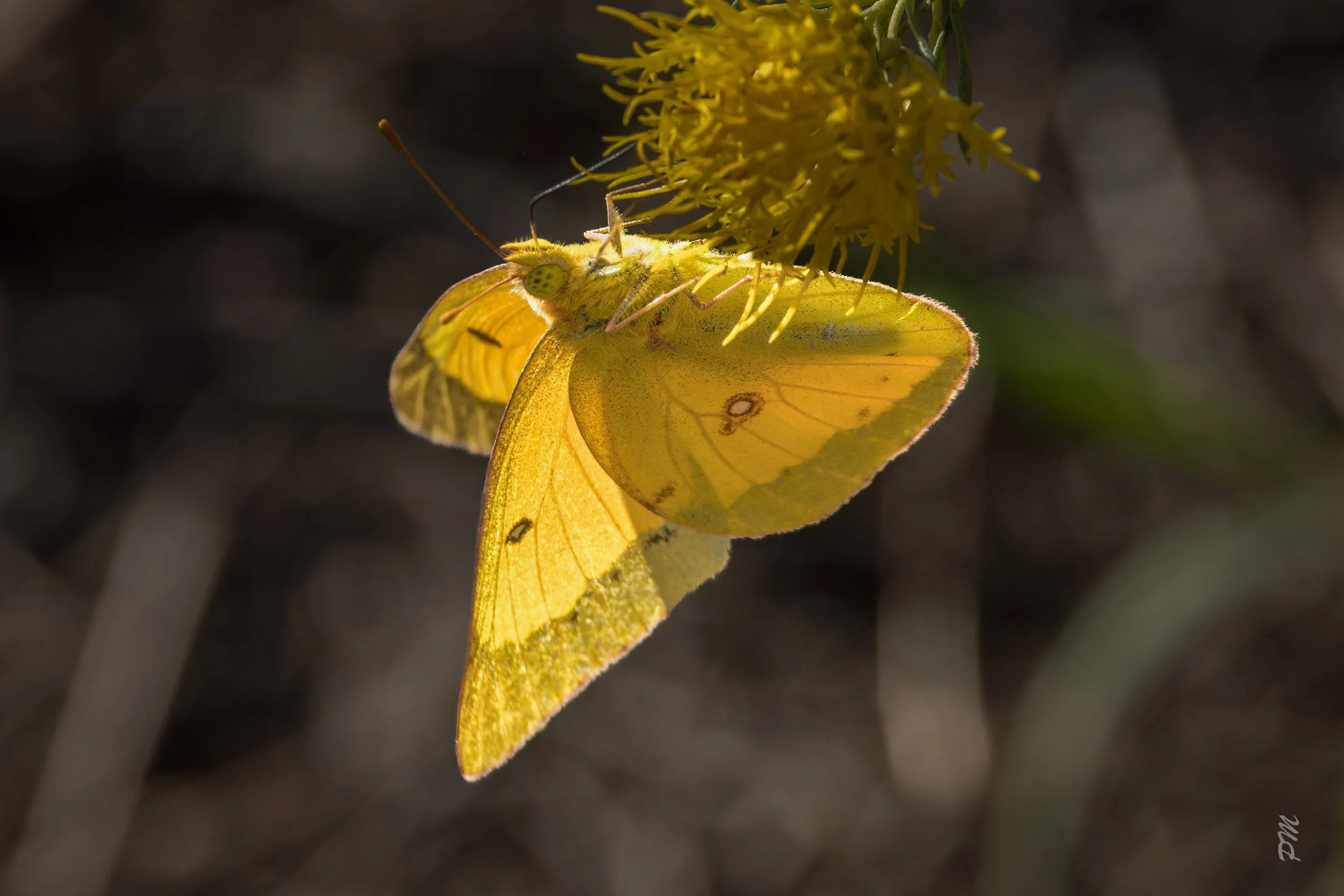
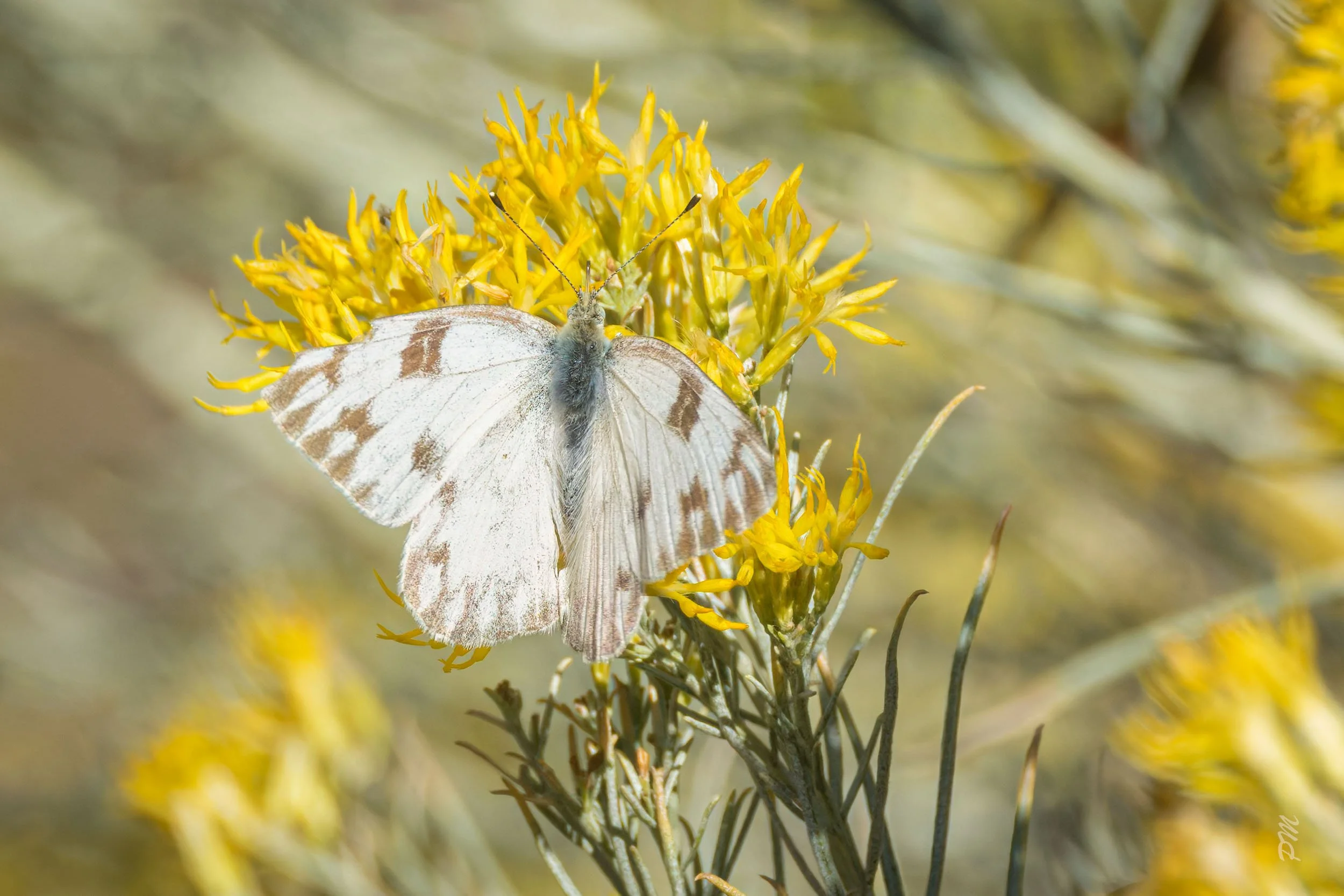
Above - Left panel - A Painted Lady Butterfly showing the underside of its wing; Middle panel - an Orange Sulphur Butterfly in a rabbitbrush plant; Right panel - a Checkered White Butterfly also enjoying some rabbitbrush.
Above - I photographed this Two-tailed Swallowtail in my neighbor’s flower garden in July.
And now we now return you to our regularly programmed content.
Feel free to leave a comment or question below. I always enjoy reading/answering them!
[1] The Return of the Monarch by Vann R. Newkirk II, July 28, 2026