Cranes, Planes, Trains and Automobiles
Except there will be nothing about planes, trains or automobiles in this article. Just cranes. Who have their own mode of transportation – flight.
(Almost) every year for about the last 15 years I have made a pilgrimage to Monte Vista, Colorado, a small town in the San Luis Valley of Colorado, with a population of 4,200 people and a seasonal population of 10,000 Sandhill Cranes. That “season” for Sandhill Cranes is a 4–6-week window in late February to late March where they all migrate from their winter home of New Mexico to their summer “timeshare condos” in Yellowstone National Park. Their layover is at the Monte Vista National Wildlife Refuge, 15,000 acres of fields of cereal grains and corn and receding water, all of which attract the cranes for refueling and recharging before they make the trek up north. It’s even a time to look for mates if they arrive unattached as cranes are monogamous creatures who mate for life otherwise.
Above - Sandhill Cranes graze on grains in the background while a Northern Harrier patrols the same field more likely for small mammals like rodents
Two crane daily activities are what has attracted me year after year. One is the awe-inspiring spectacle of “squadrons” of 25-50 cranes arriving just before sunset from throughout the Valley to the same location in the Refuge to roost for the night. They fly in wave after wave with their unique call announcing their arrival. (As always, all images best viewed full screen by clicking on any image to enlarge)
Above - Five cranes in flight coming in for the evening roost
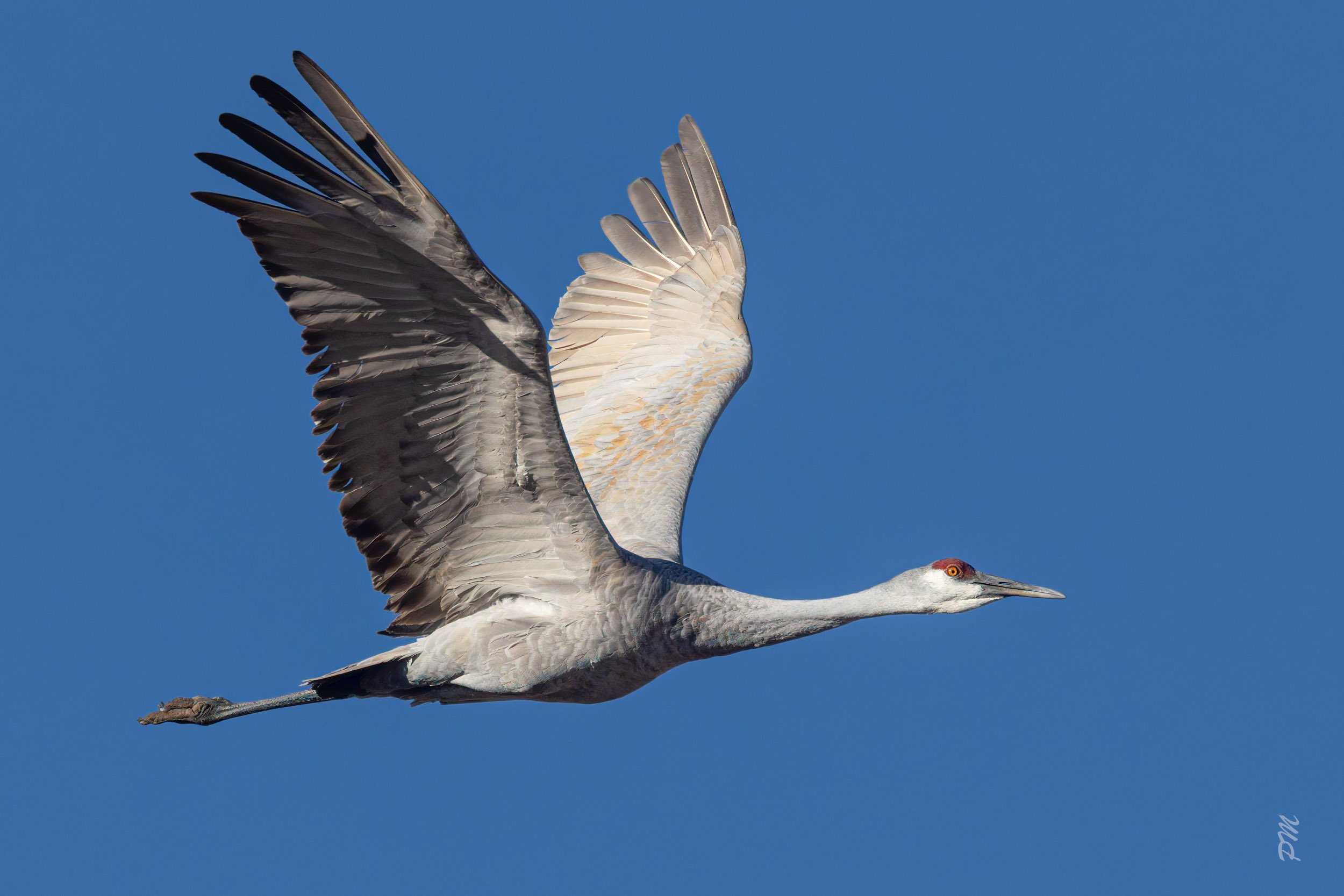
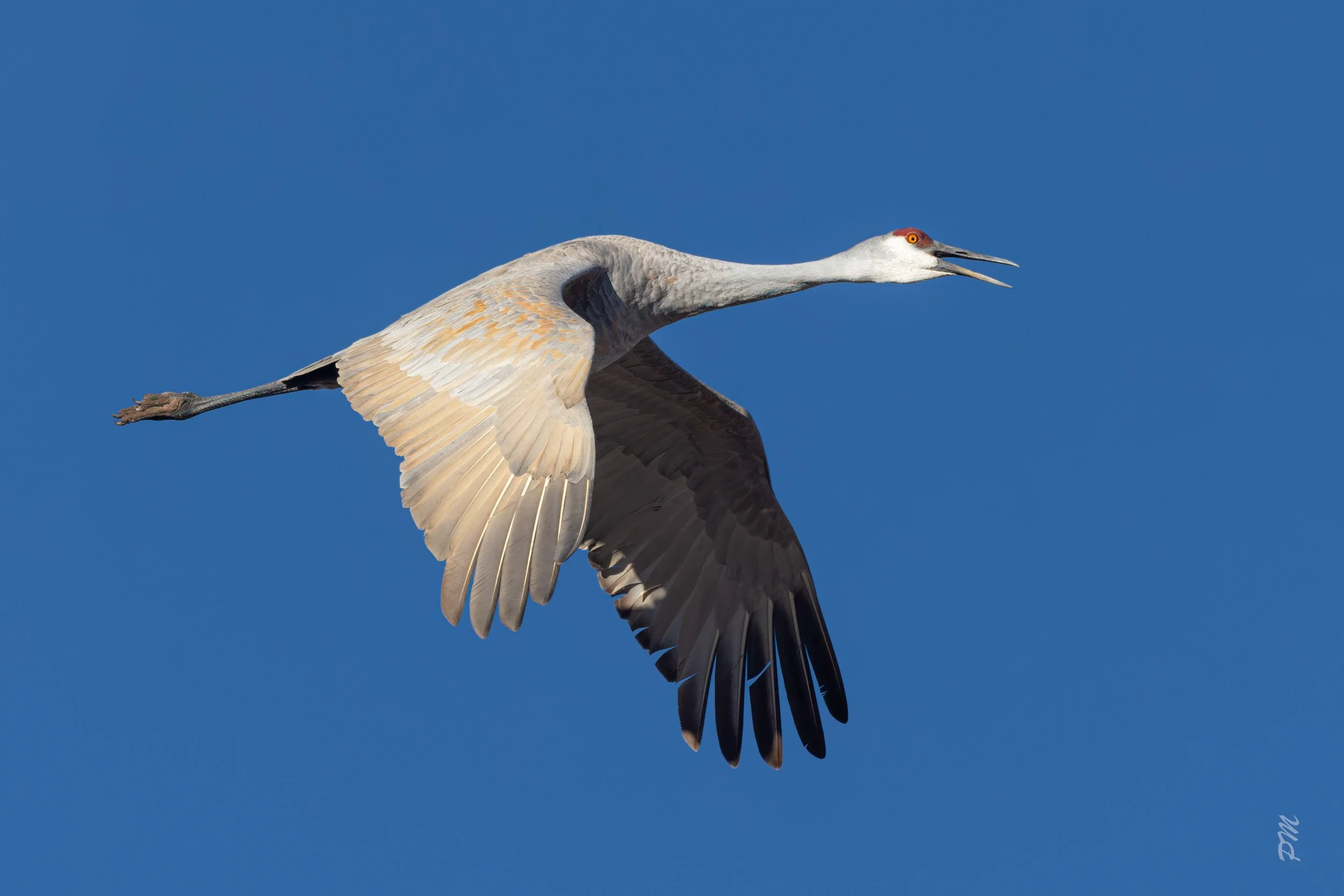
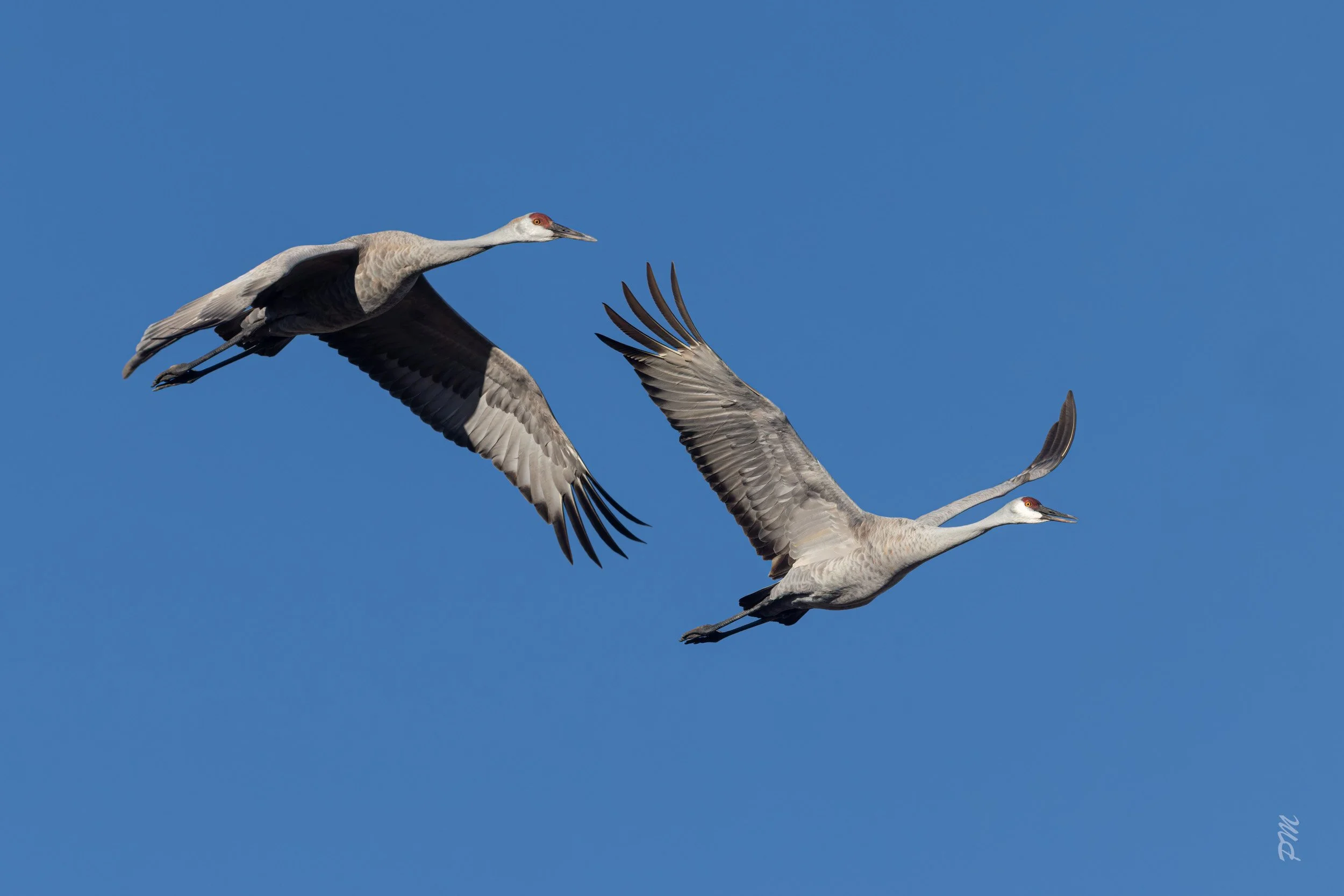
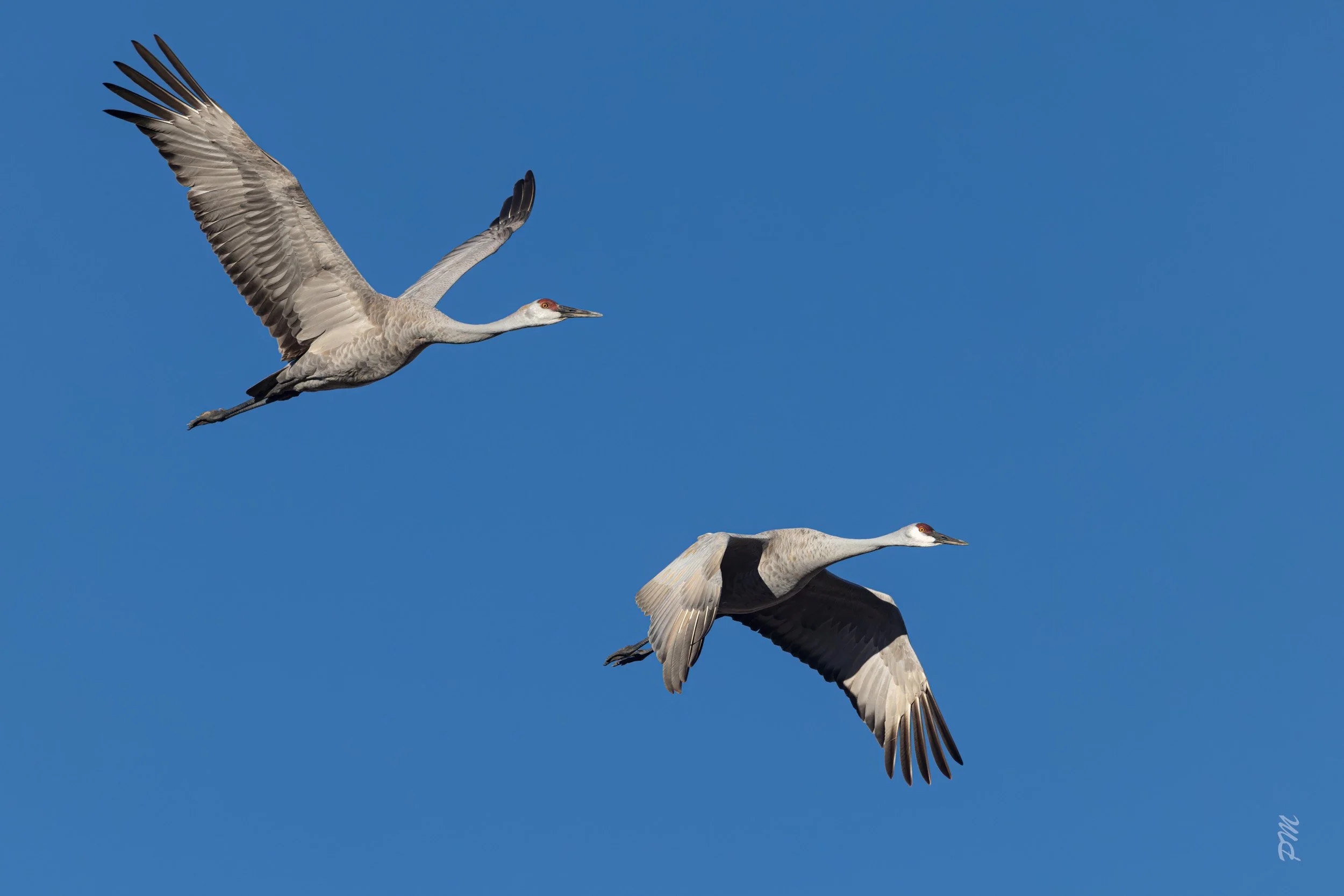
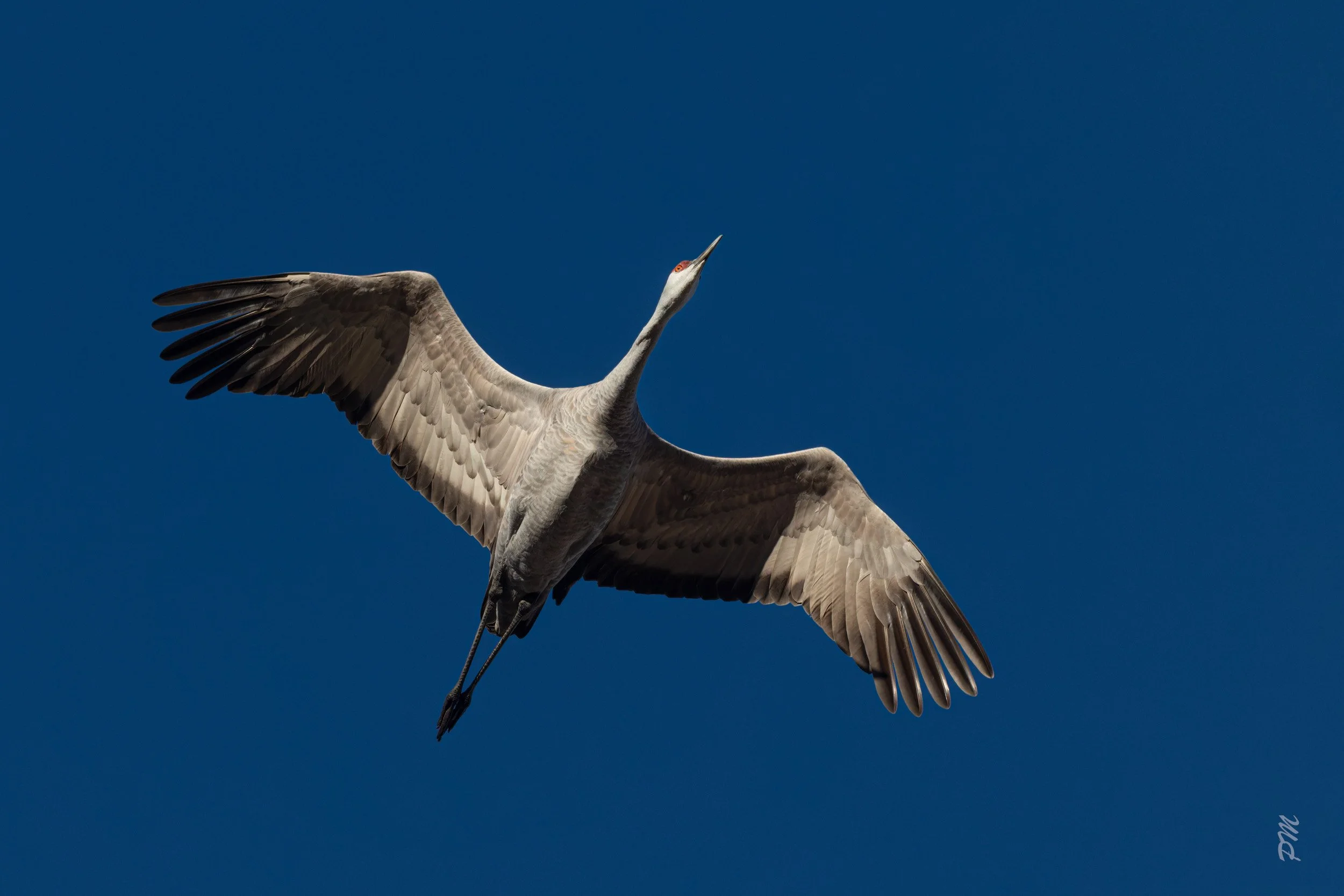
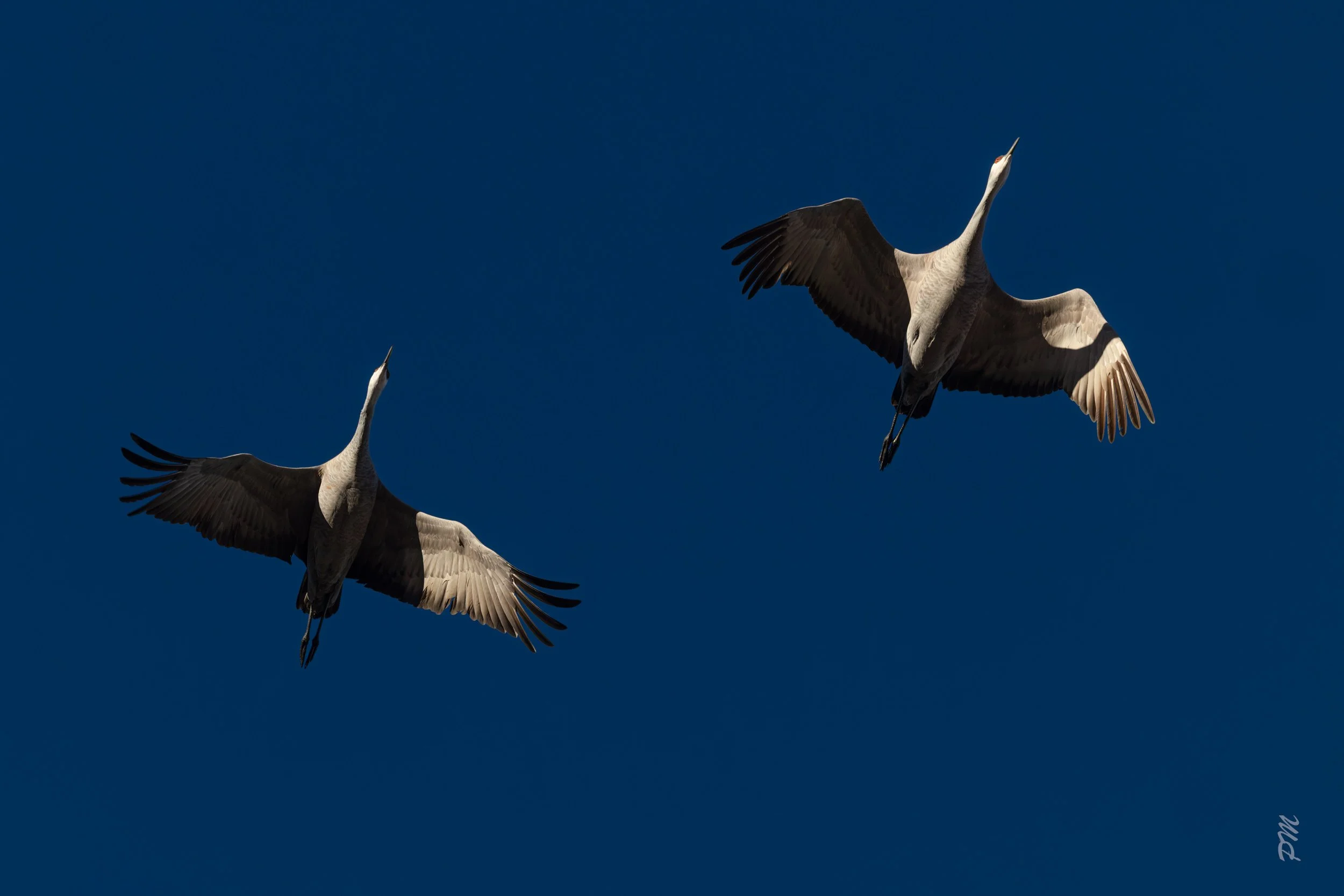
A corollary to that is the rare time when geese join in and they all take off in the morning at the same time to a sound that is somewhere between a cacophony and concert as this very short video below shows. (sound on!) Notice that a lot of cranes stayed on the ground, though. I wonder if they thought everyone else was silly to leave?
Above - Video and audio of Sandhill Cranes and geese all taking off together
The other activity is their “dancing”. Why do they dance? Three reasons: 1) to court a mate; 2) to fend off other cranes from their territory who might be getting too aggressive of greedy in snatching food or who knows what else; and 3) to show their affection for their mated partner as almost a sort of a vow-renewal ceremony. There are very subtle differences between each of those dances, but one true test is that the two dances that are based around showing affection often include one of the cranes (usually the male) picking up a stick or clod of dirt in its beak to briefly show the crane he is trying to impress. And, let’s face it, don’t we all appreciate our partners handing over a stick or dirt when we’re in love? No? Well, cranes do so, that’s all that matters.
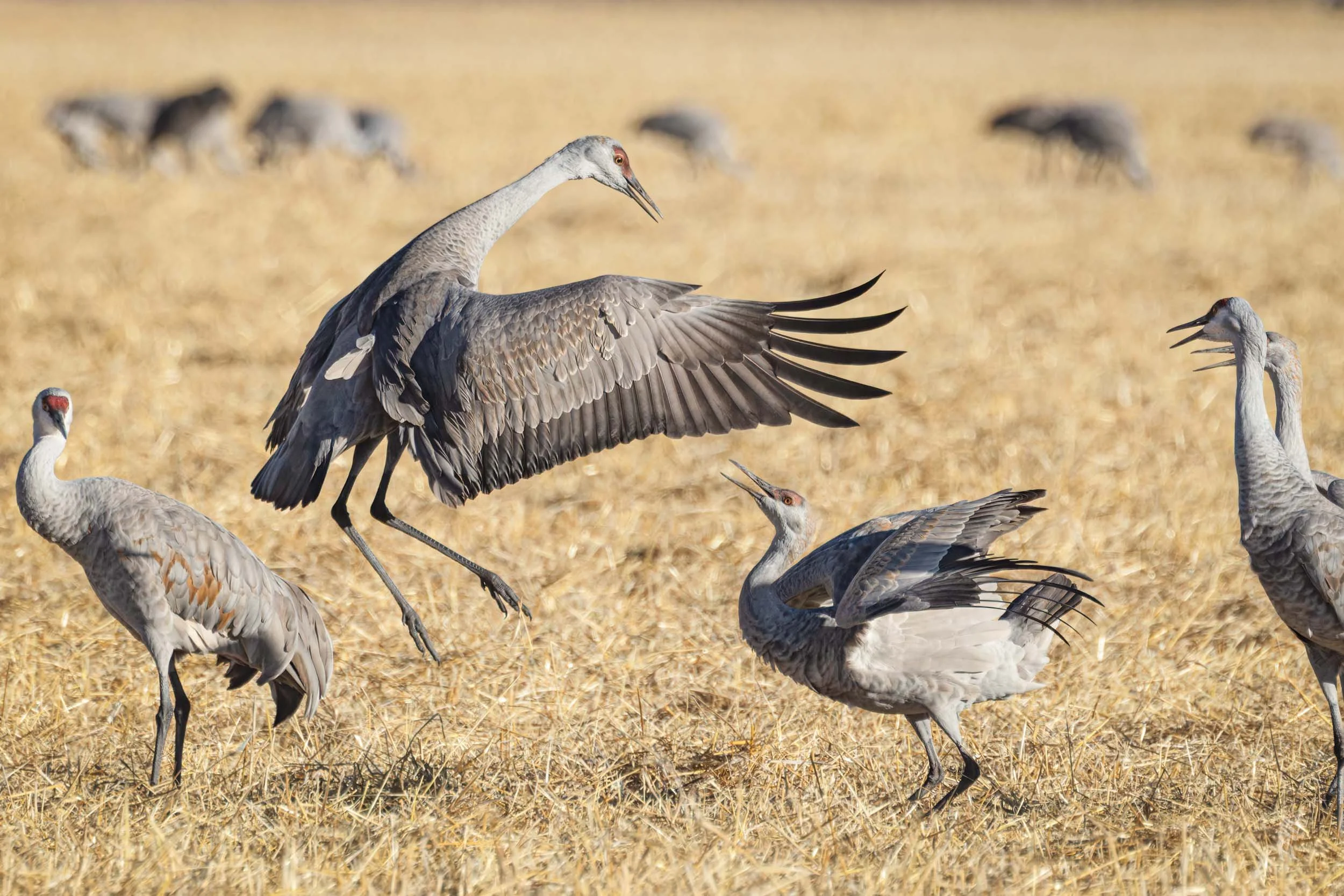
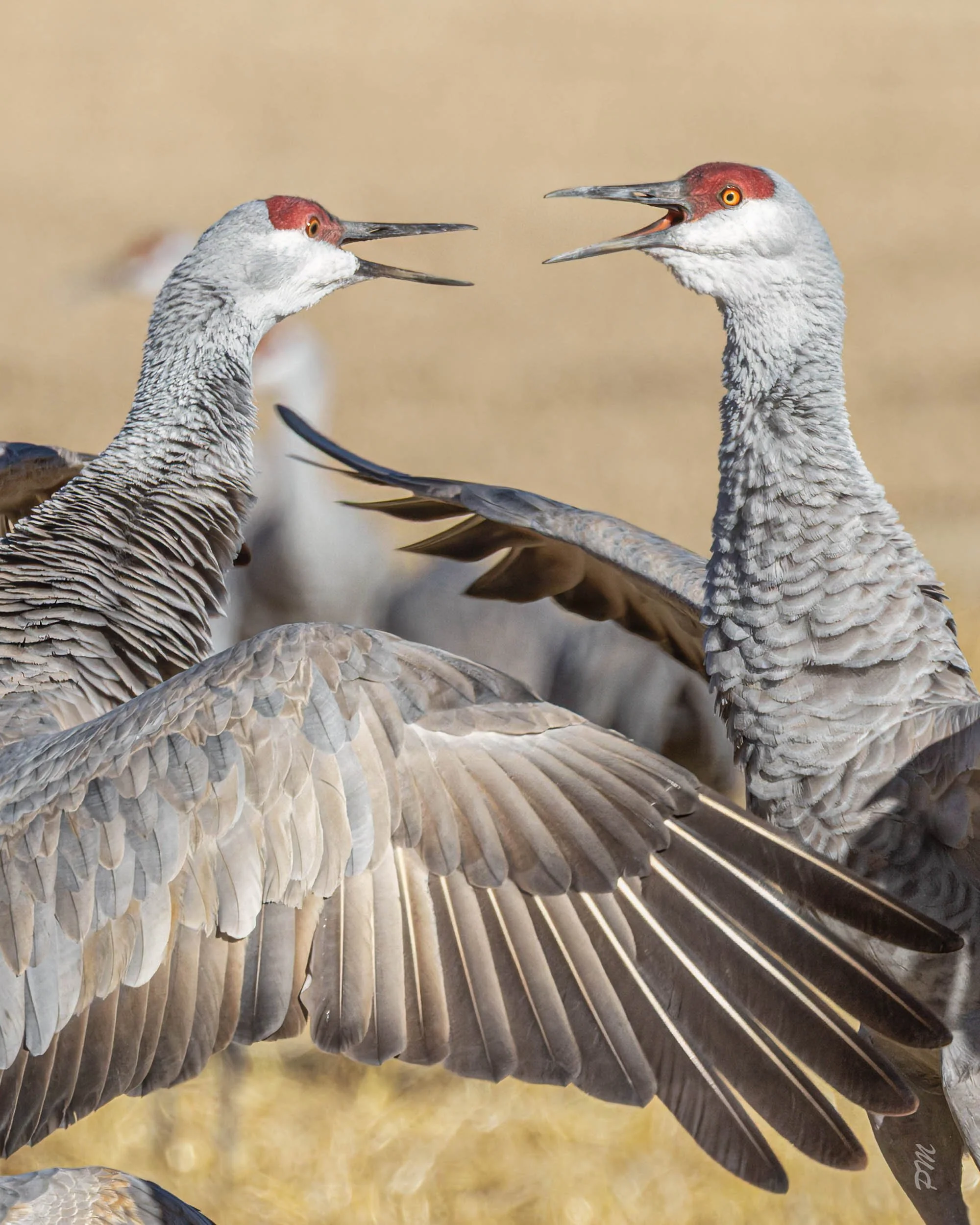
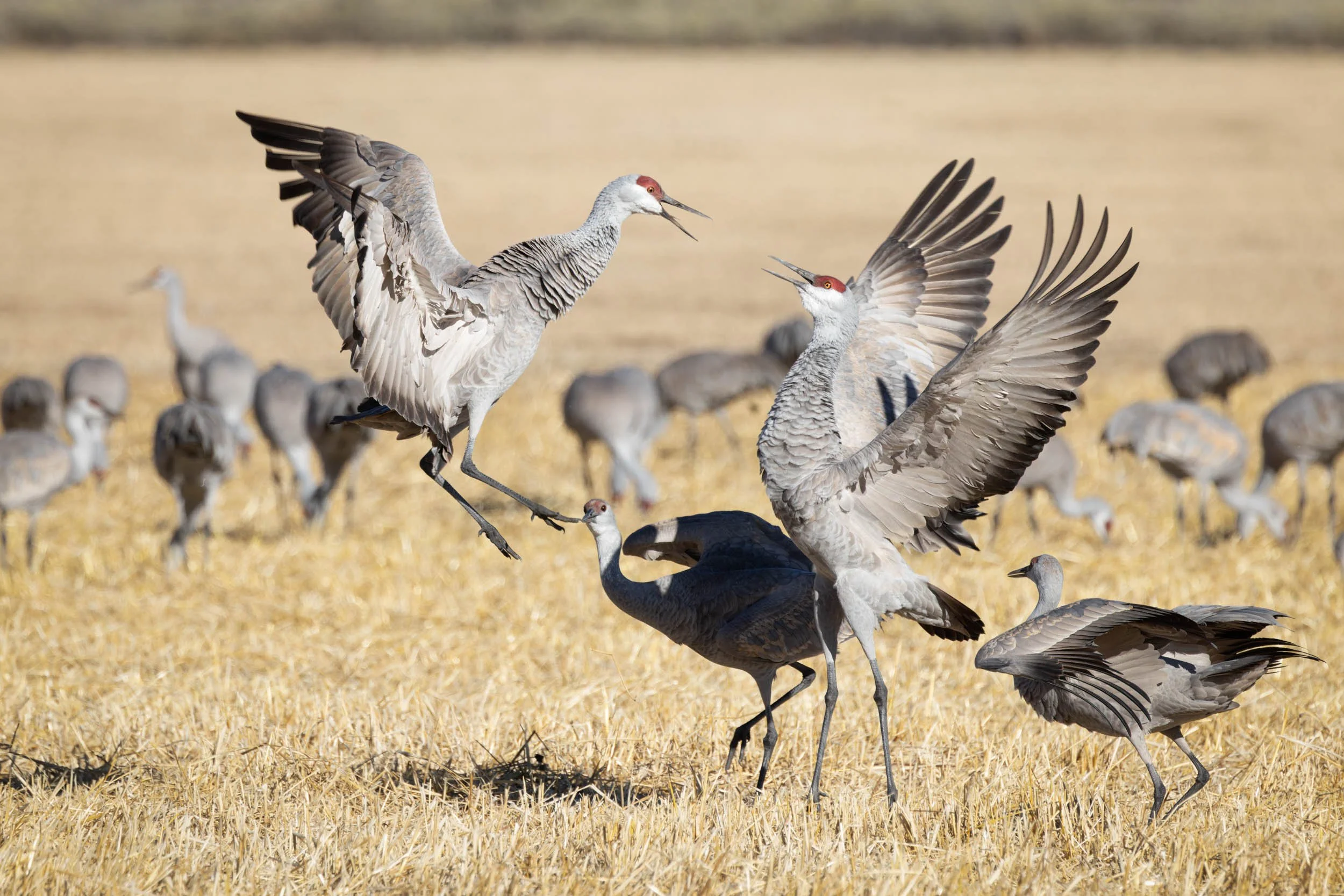
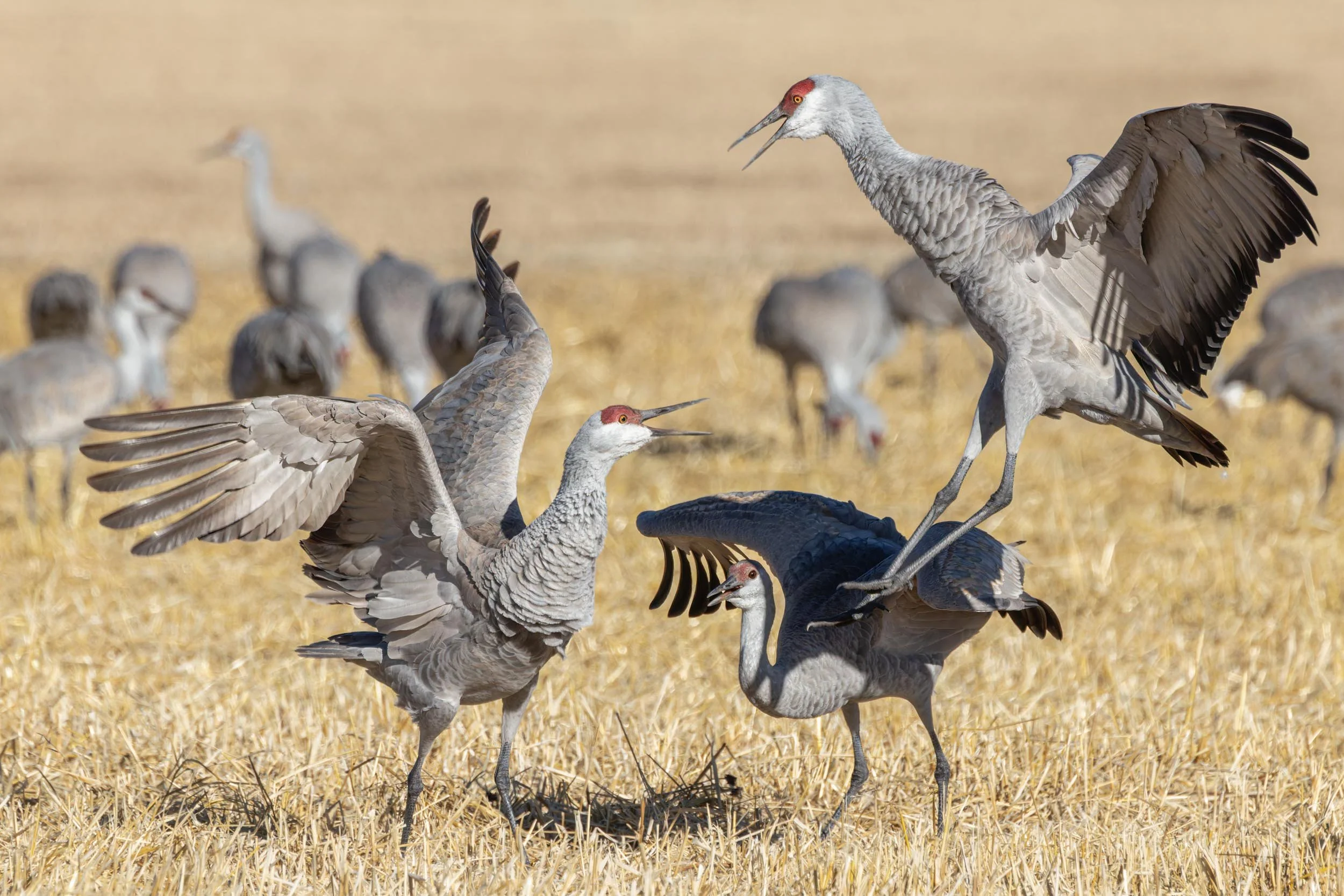
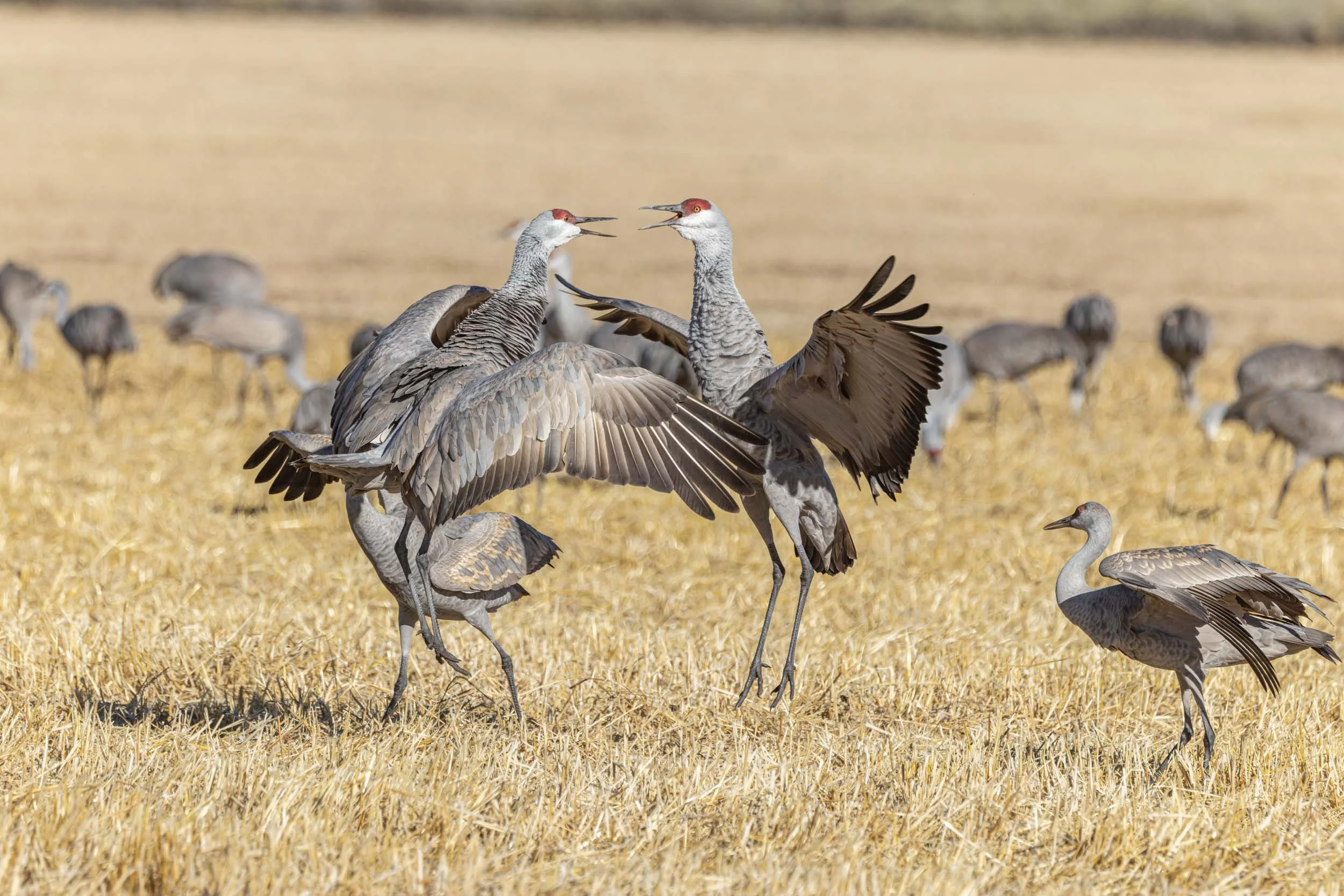
The dance, for whatever reason it’s being done for, generally consists of alternate jumping and bowing. Watch this slow-motion video I put together of the cranes performing in slow motion. You may notice some stick and dirt-grabbing so it’s likely this is a courting dance. Notice how more than two cranes are involved as they seem to go in and out of being interested in each other.
Above - Slow-motion video of three Sandhill Cranes performing a courtship dance with each other
Of course, every year that I go I see other interesting creatures – and not just birds. In a visit to nearby Alamosa I happened to find a porcupine up in a tree. It was hard to get a good shot as it was buried among the branches but it was a first-ever sighting for me!
Above - A porcupine is well-camouflaged in the branches of this tree
I also ran across two owl nests. The combination of staying a distance away and both locations likely with the females about to or just having laid eggs, they were really low in the nest and hard to photograph like the photo below proves.
Above - A Great Horned Owl lays low in her nest
And of course, the magical beauty of the San Luis Valley just can’t be beat, especially at sunset over the Sangre de Cristos and sunrise with a setting full moon.
Above - Spectacular sunset over the Sangre de Cristo mountain range
Above - One morning he full moon was setting as the sun was rising and the Sandhill Cranes were flying. What luck!
I’m quite certain I will return next year for this annual event. This experience, unlike me, never gets old. (Feel free to drop a comment or question below)