This will be the perfect title of my children’s book about this month’s subject should I ever get around to writing it. For now, here’s an abridged adult version of the story which is about two rare birds here that recently showed up for my (and many others’) viewing pleasure. As always, photos best viewed by clicking on each to enlarge.
Above - Lewis’s Woodpecker in a Creeper bush with a hint of Fall foliage
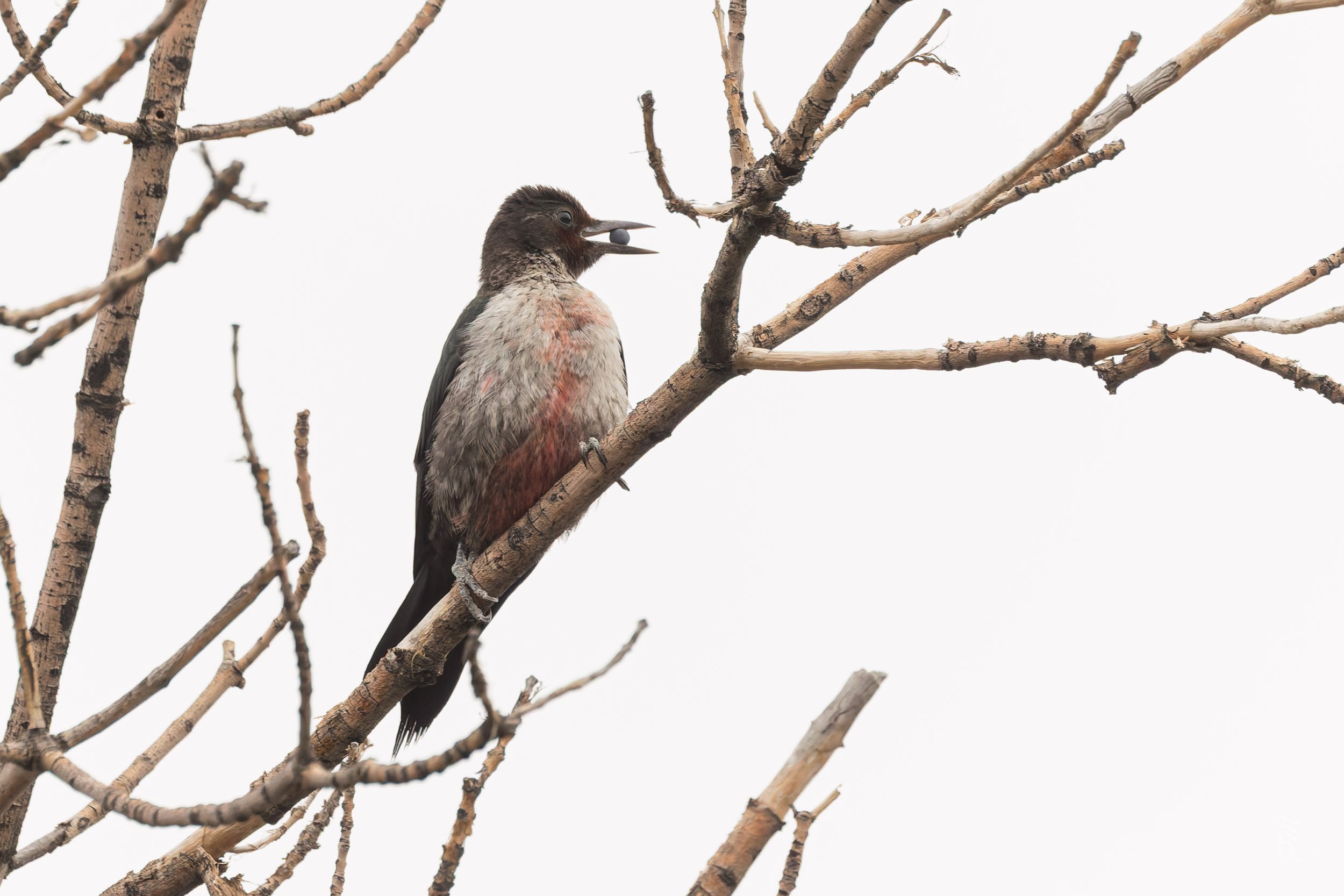
So maybe you already knew this one above. It’s a Lewis’s Woodpecker, a bird that can be seen in the Rocky Mountains and west but rarely down here. That is why I didn’t have the vaguest idea what this bird was when it flew by me one late afternoon in September at the trails by our local Audubon Center, landing on a snag,
Above - This where I first found the bird, sitting atop a snag perhaps looking for a meal of insects?
It was only by inputting it into my phone’s Merlin app (get that app if you don’t have it!) that I got the pleasant surprise answer that this was a Lewis’s Woodpecker, a lifer bird for me. It is named after Merriweather Lewis of Lewis and Clark fame who first noted and described it during one of their expeditions. You can see that they are strikingly beautiful birds with an almost iridescent green and red coat of feathers.
Above - The Lewis’s Woodpecker in the same Creeper bush it liked its entire stay now with more Fall foliage
Above - I love when a bird hangs upside down as it did here in the Creeper bush
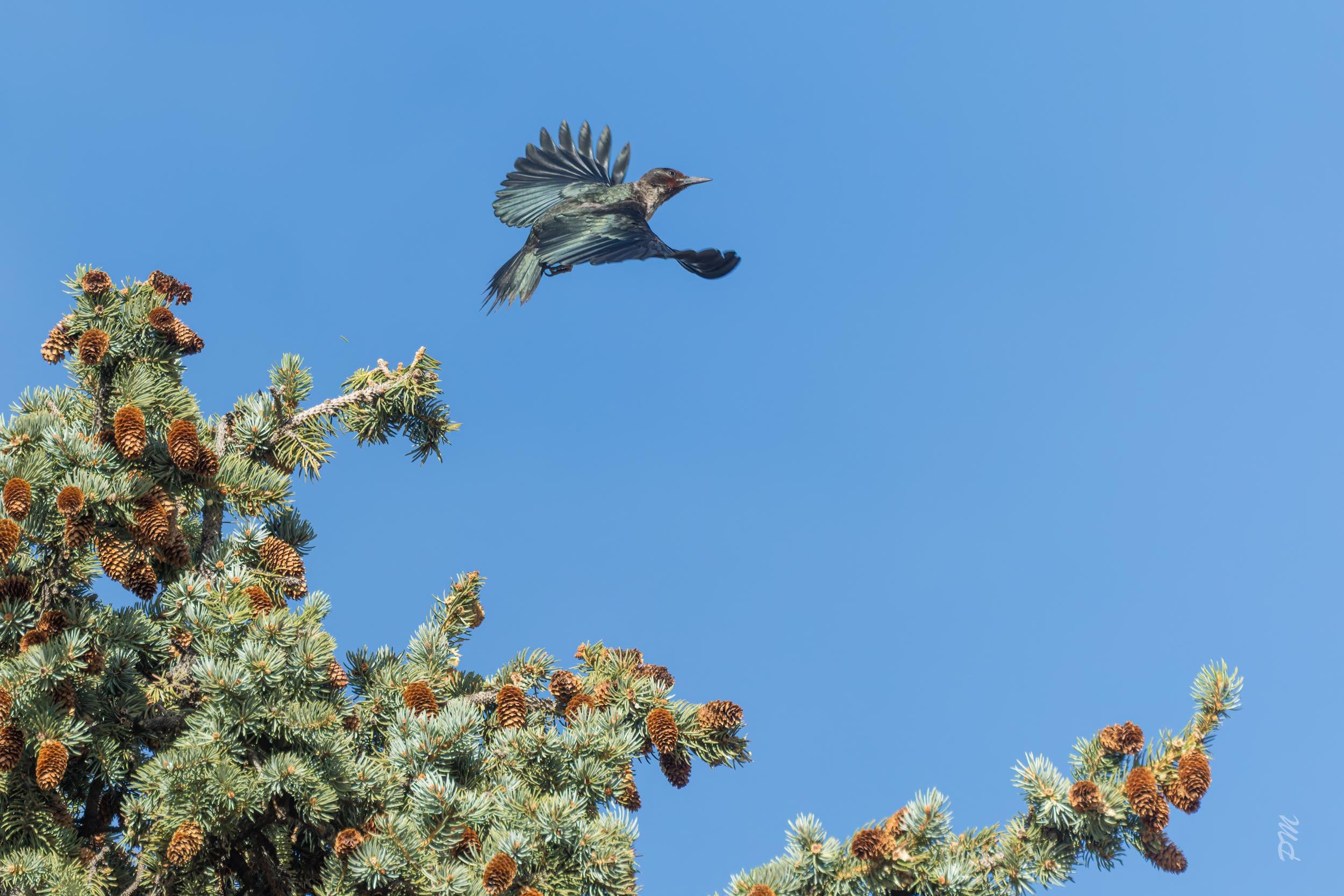
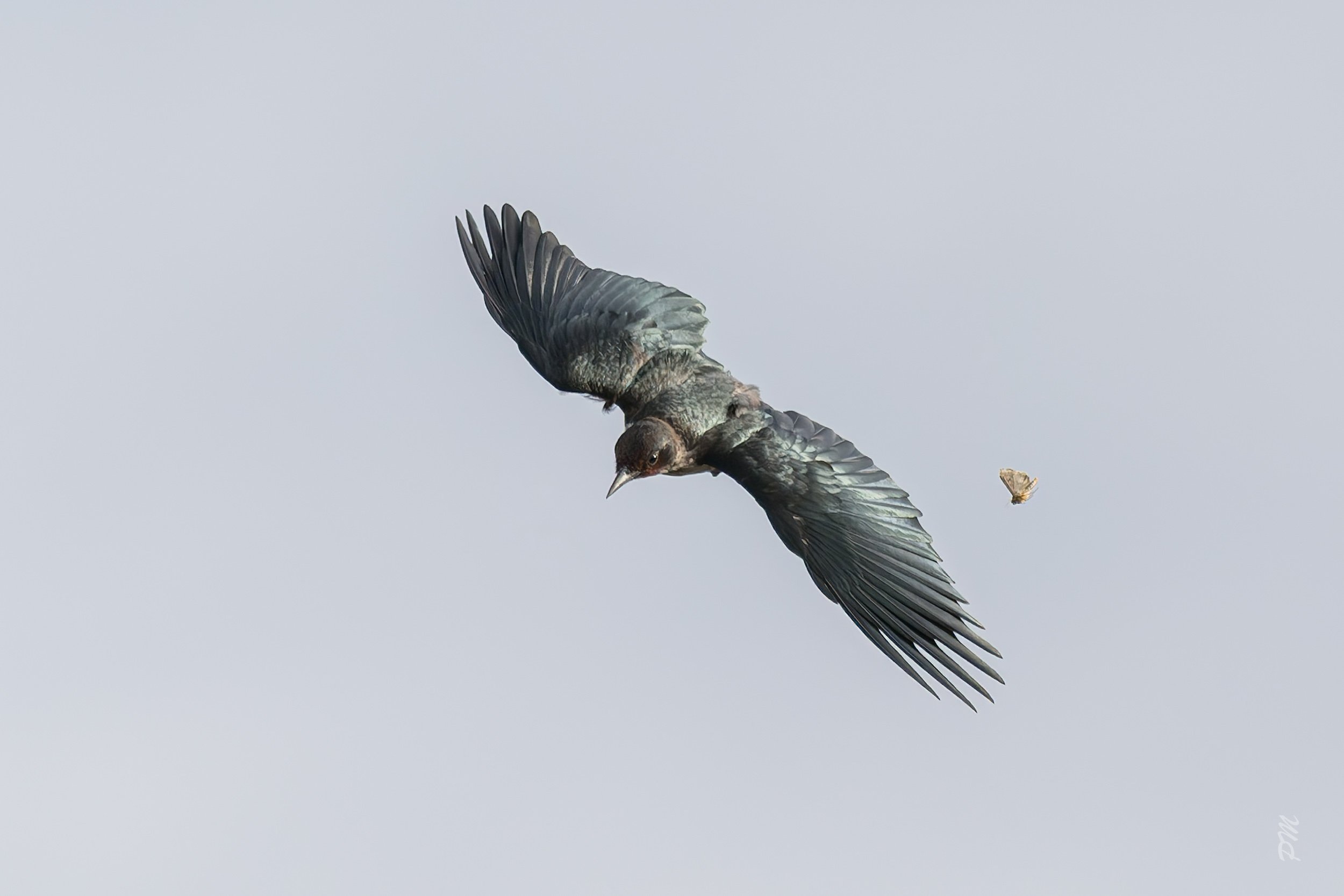
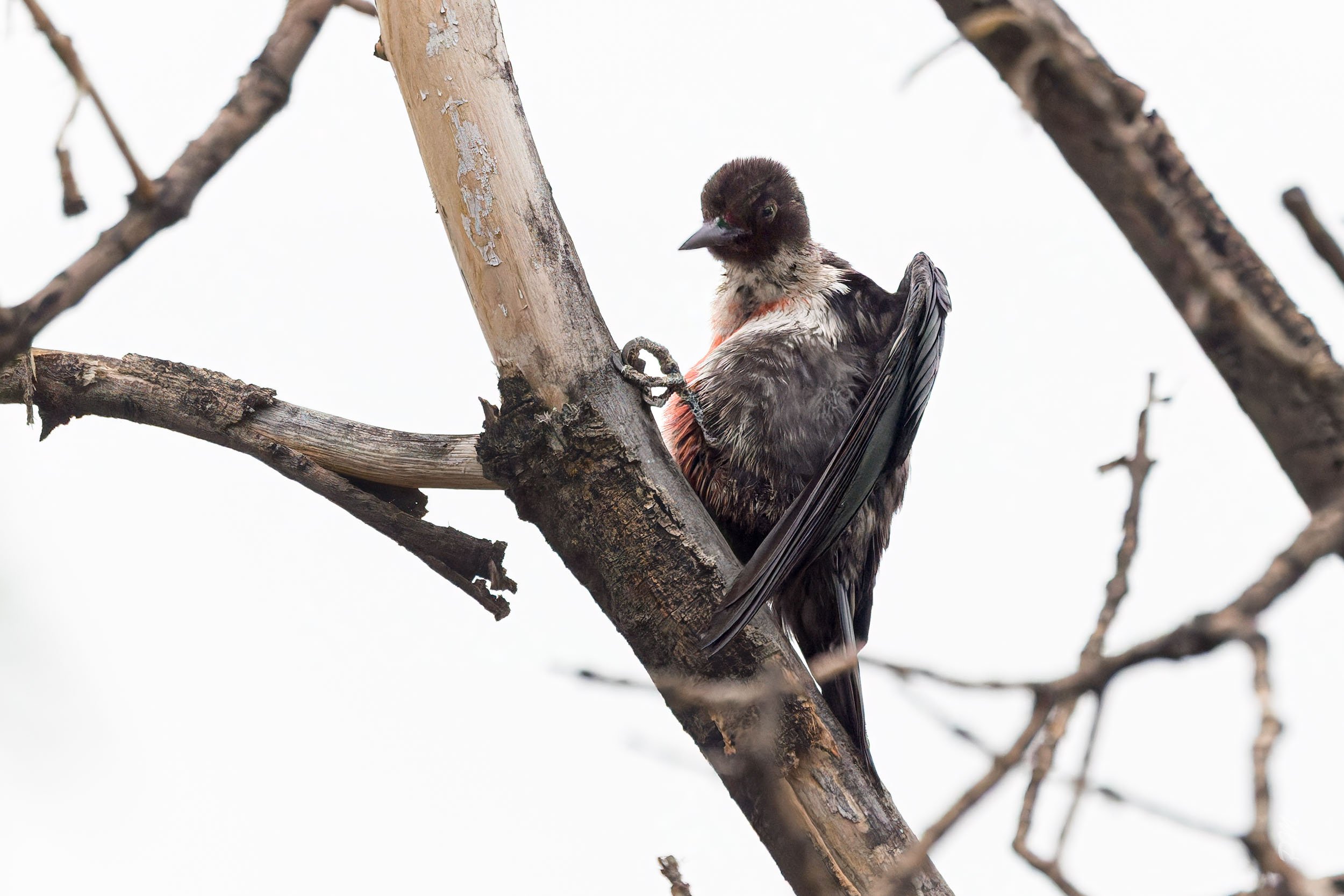
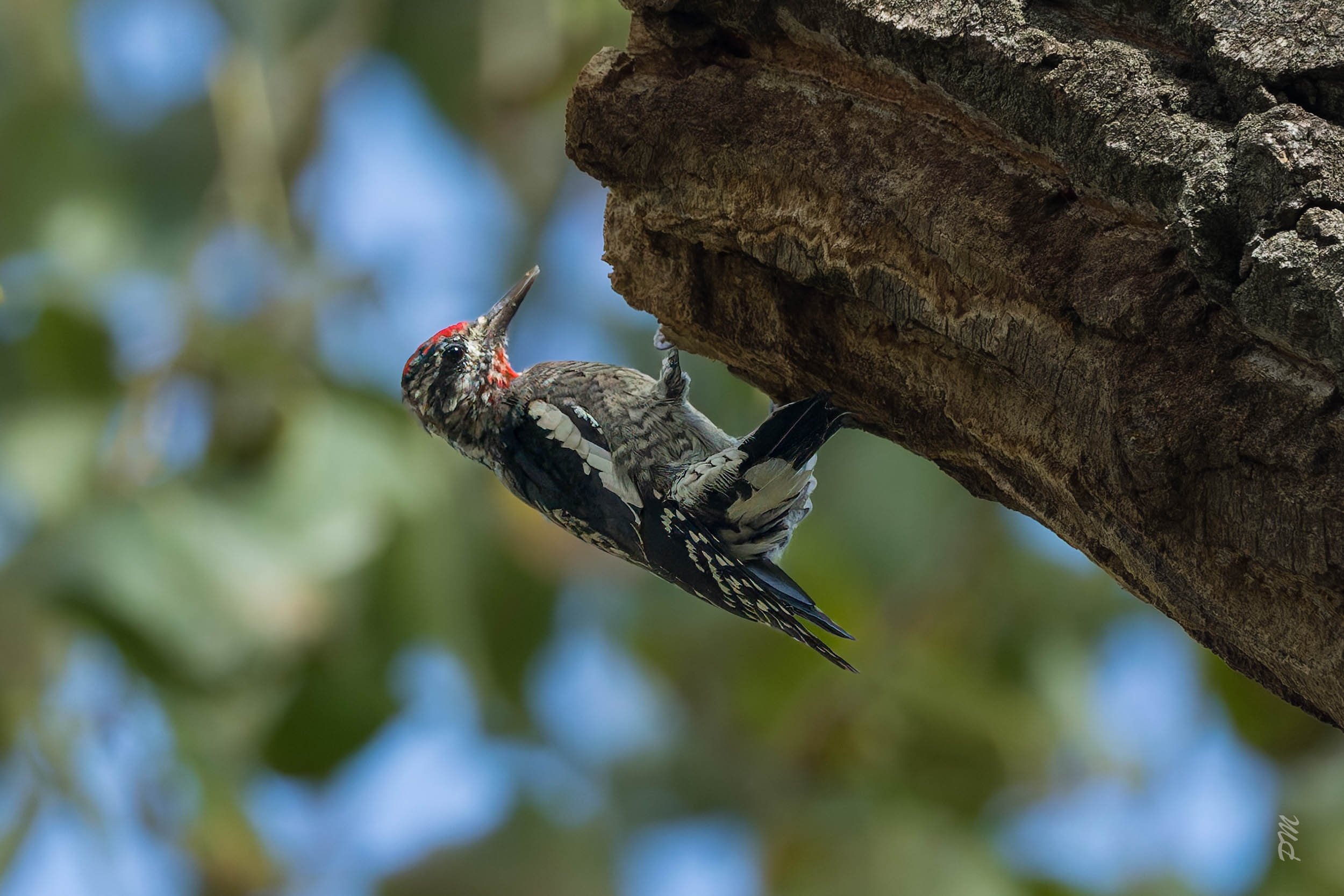
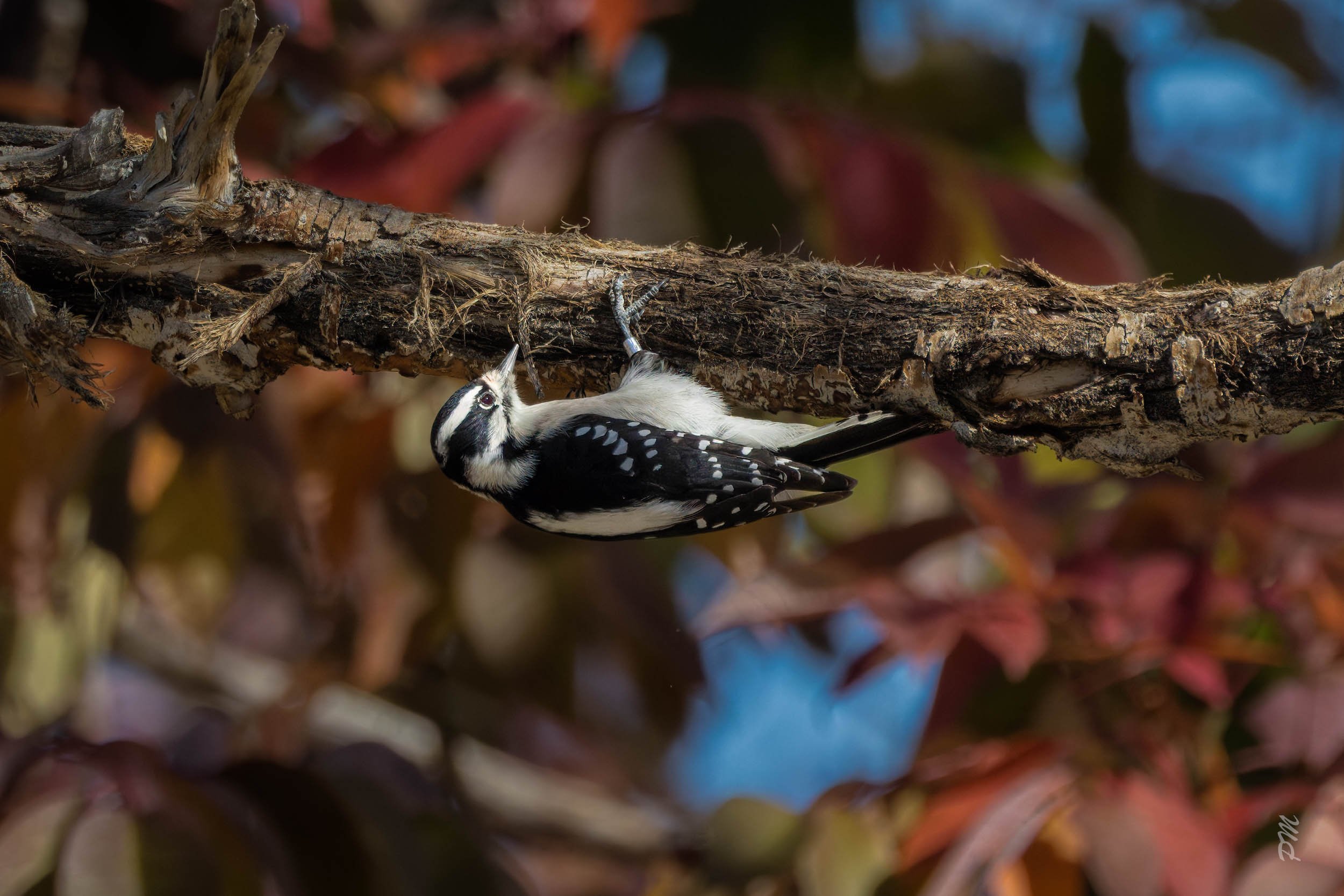
In the Fall, the season I found this “guy”?, they tend to eat mostly berries while occasionally foraging for insects on the fly. For the ten days it stuck around, I never saw it do the more traditional “pecking “for insects in trees that our more common woodpeckers like Downy Woodpeckers and Hairy Woodpeckers or even Sapsuckers do.
As much as “Lewis” the Woodpecker was off-course, that paled in comparison to a lost Couch’s Kingbird, aka “The Lost King” in my hopefully-to-be-published-one-day-story.
Above - Portrait of the beautiful Couch’s Kingbird at rest on branch
A hiking birder found this solitary Couch’s Kingbird in the Marjorie Perry Preserve of the south suburbs of Denver on October 1, a mere 800-1,800 miles off course depending upon where in its traditional range it came from and has only been seen ONE TIME before in Colorado. Since a Couch’s Kingbird had only been seen only one other time EVER in Colorado, I’m guessing the hiker was stumped at first as to what they saw. We do get Western Kingbirds here, but they are summer residents only. Additionally, this Kingbird has the brightest yellow breast and underwing feathers I’ve ever seen on a bird.
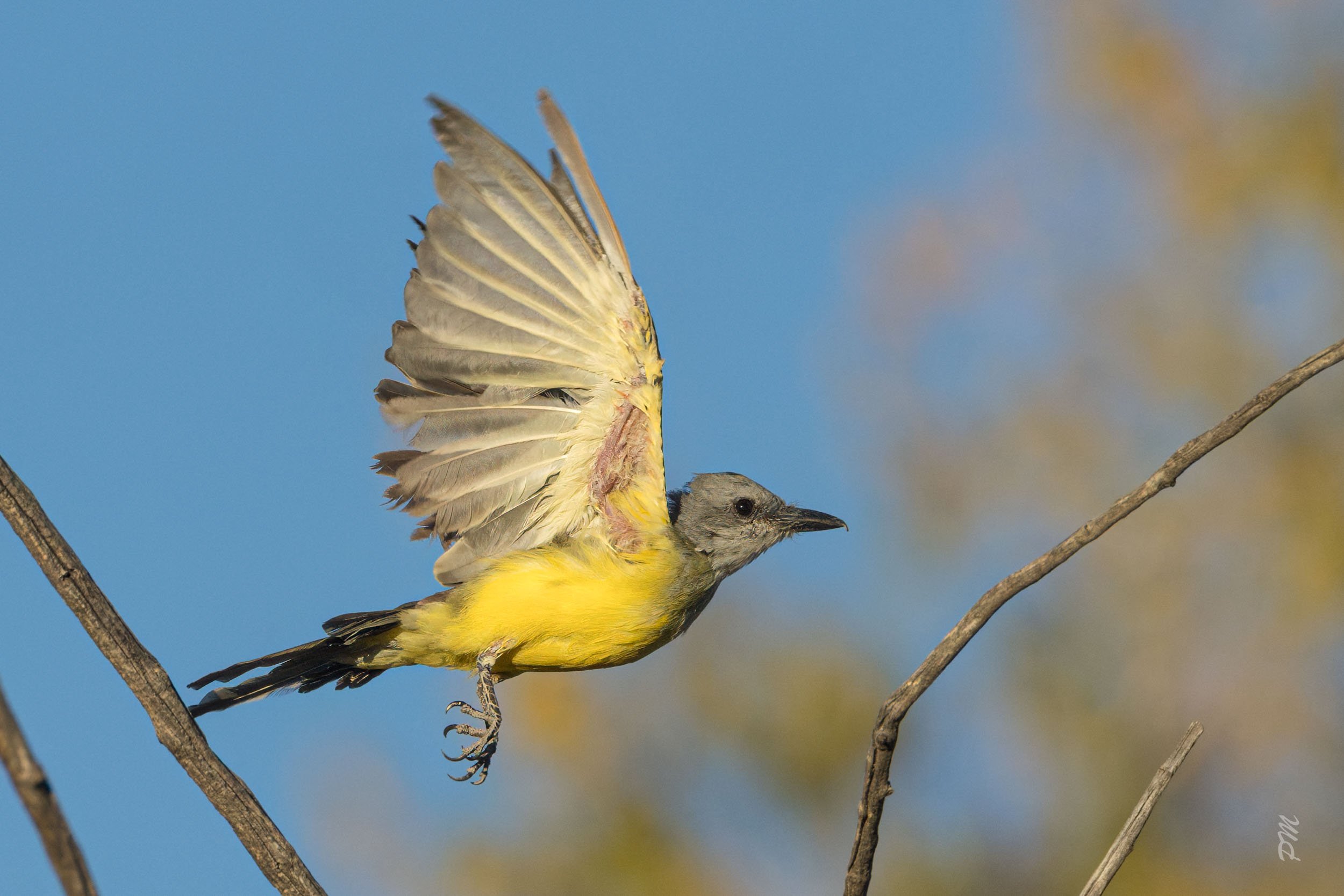
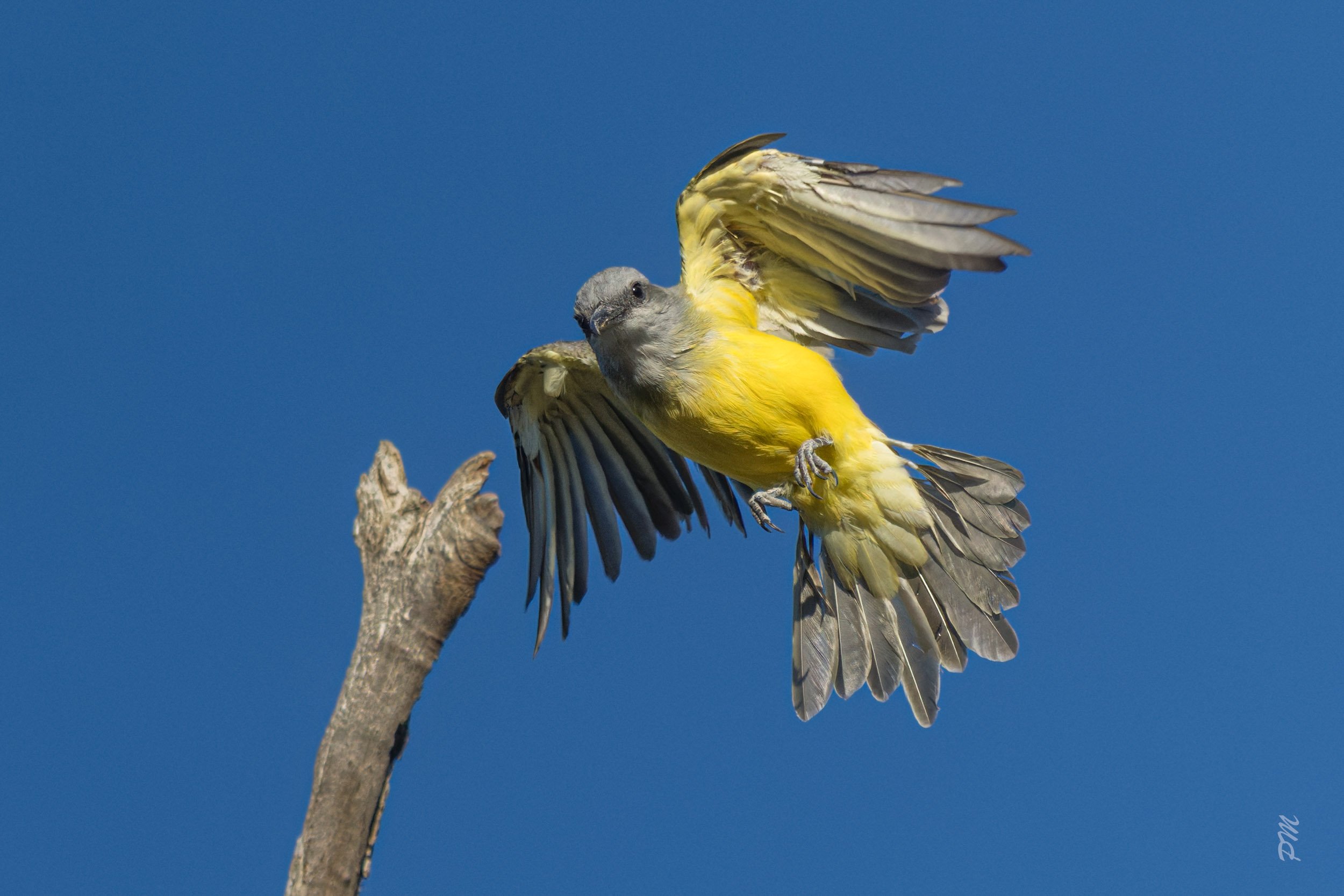
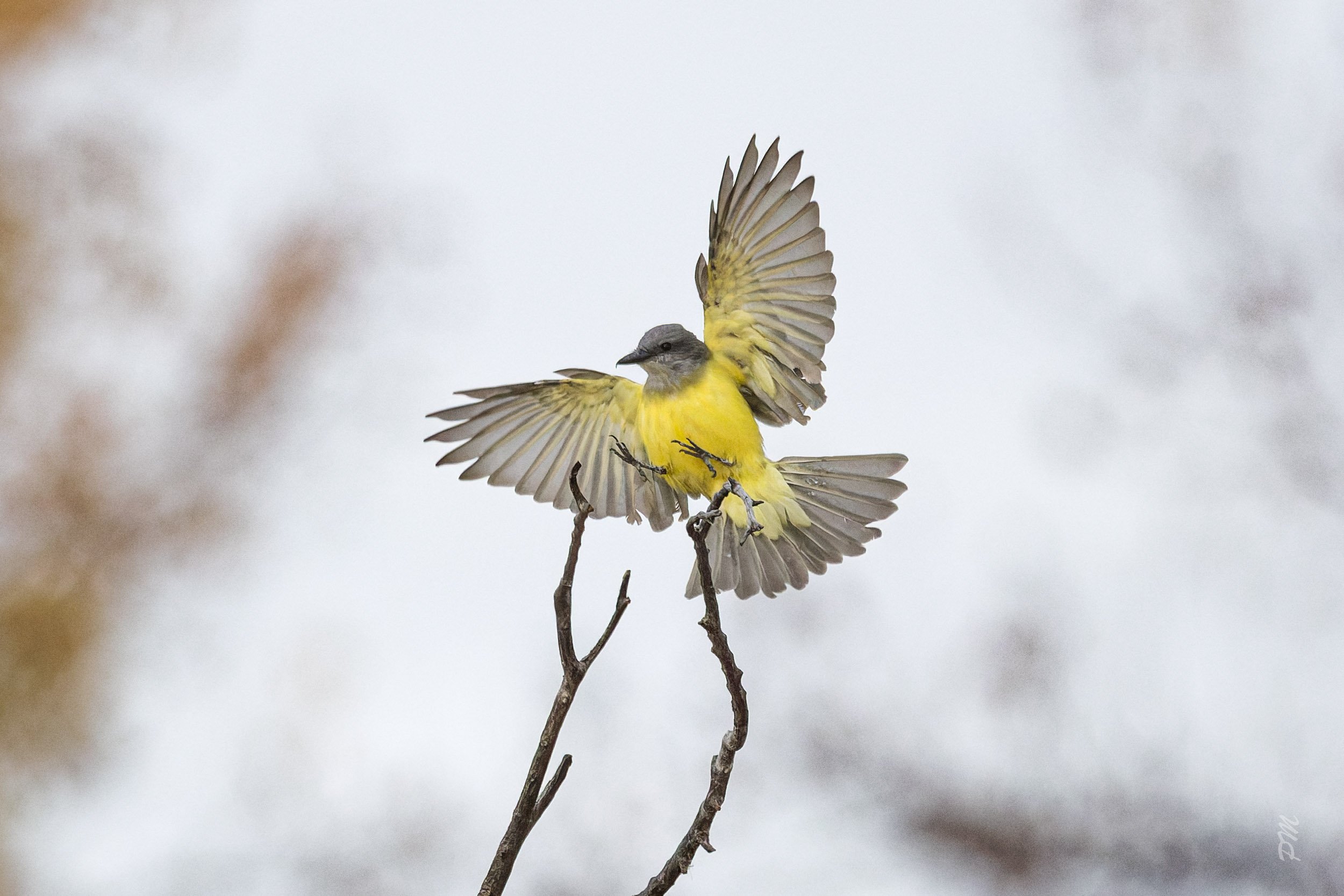
But it did get correctly identified by the experts and the pilgrimages by birders commenced. I actually rarely chase rare birds (remember I found the Lewis’s Woodpecker) but this was ten minutes from my house so I acquiesced. I have since made many trips and fortunately captured some photos and videos I am very proud of, including those of it feeding, flying and “socializing”. My photos are currently being used by local ornithologists (and may nationally) to learn more about their habits such as eating...
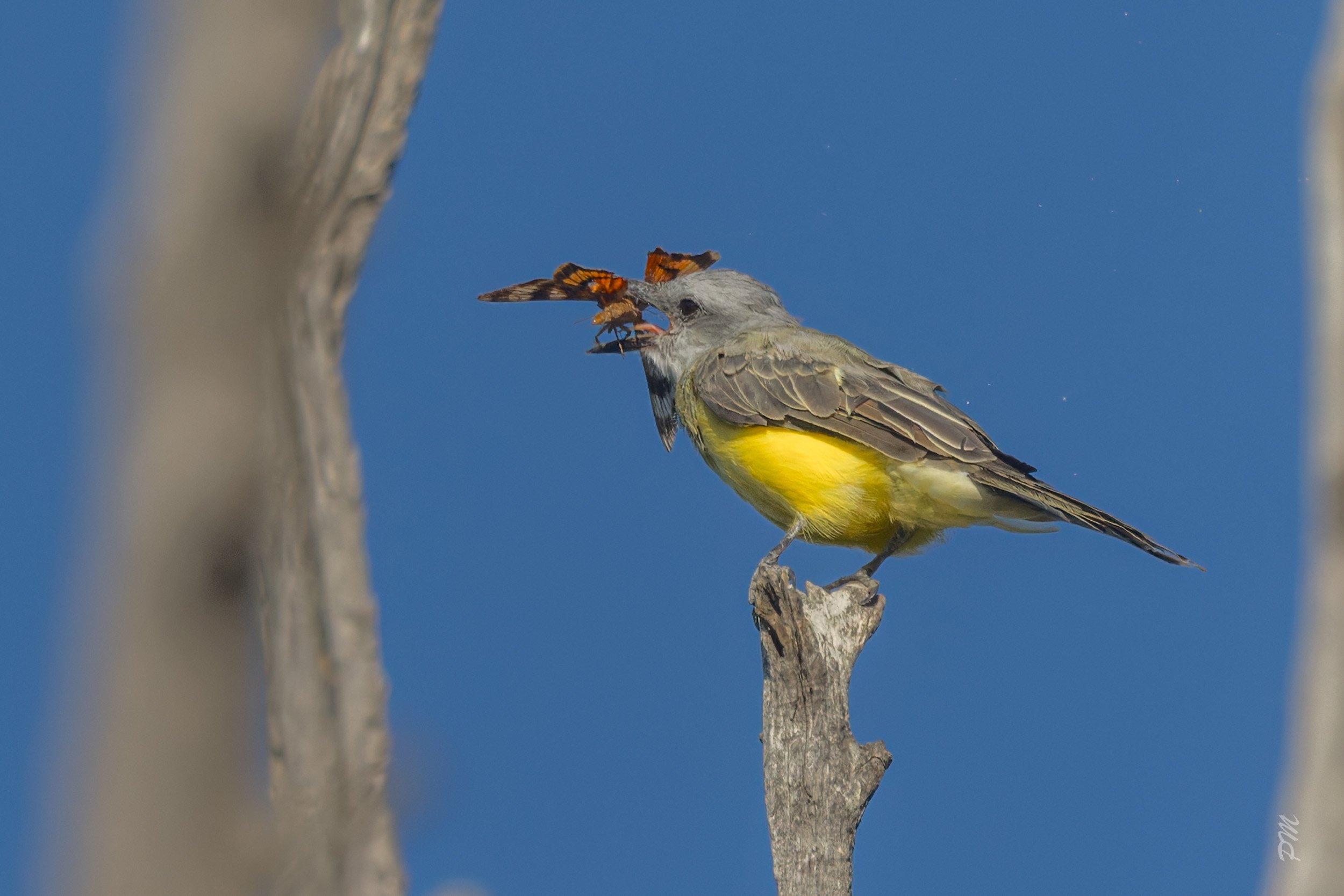
Above - Couch’s Kingbird caught a moth and is about to devour it!
Above - Couch’s Kingbird with a European Paper Wasp in its bill shortly before swallowing it.
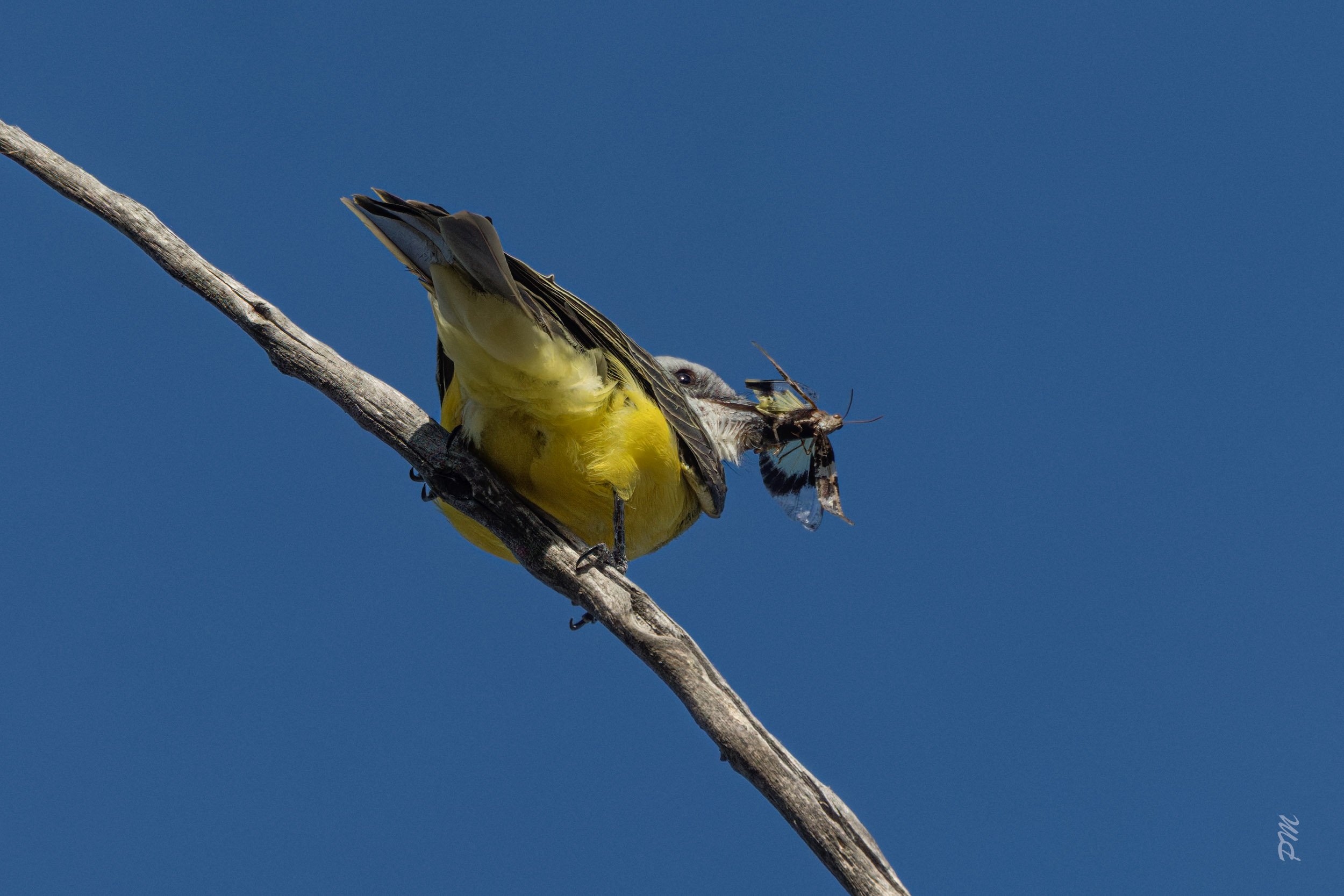
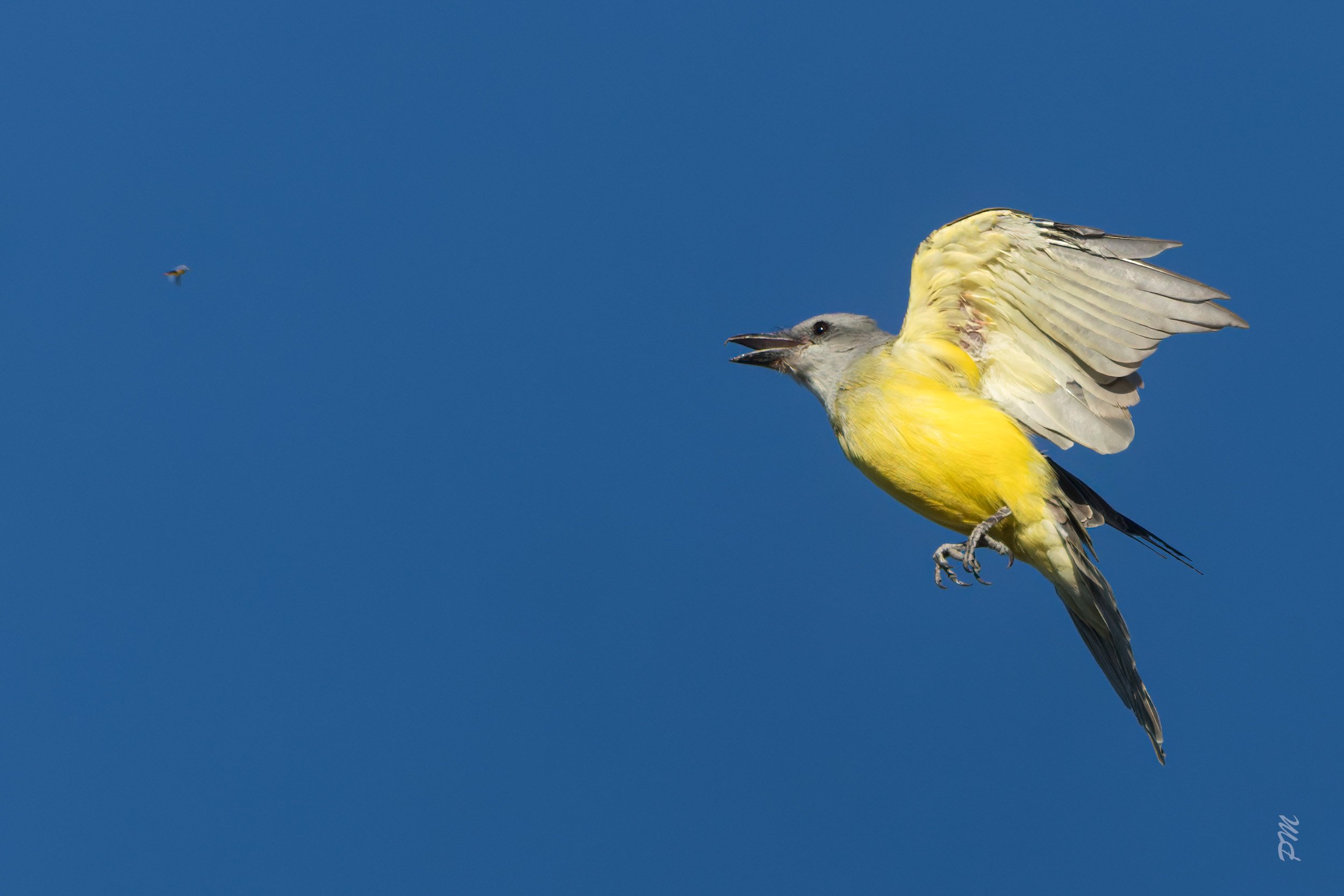
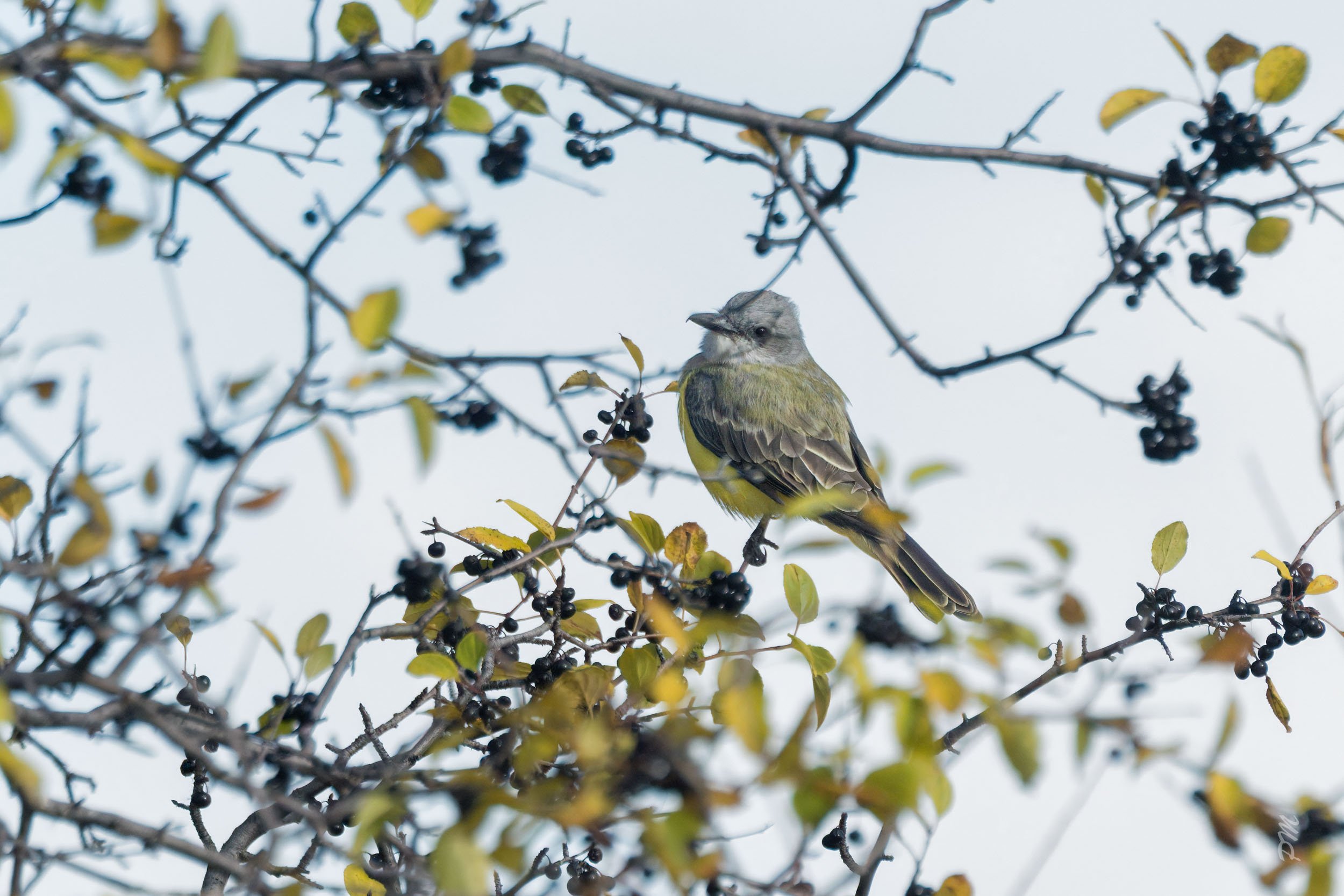
Above - Couch’s Kingbirds regurgitate undigested food particles much like owls do. Here you can see several bits of these “pellets” as the bird regurgitates them.
…and socialization with other species.
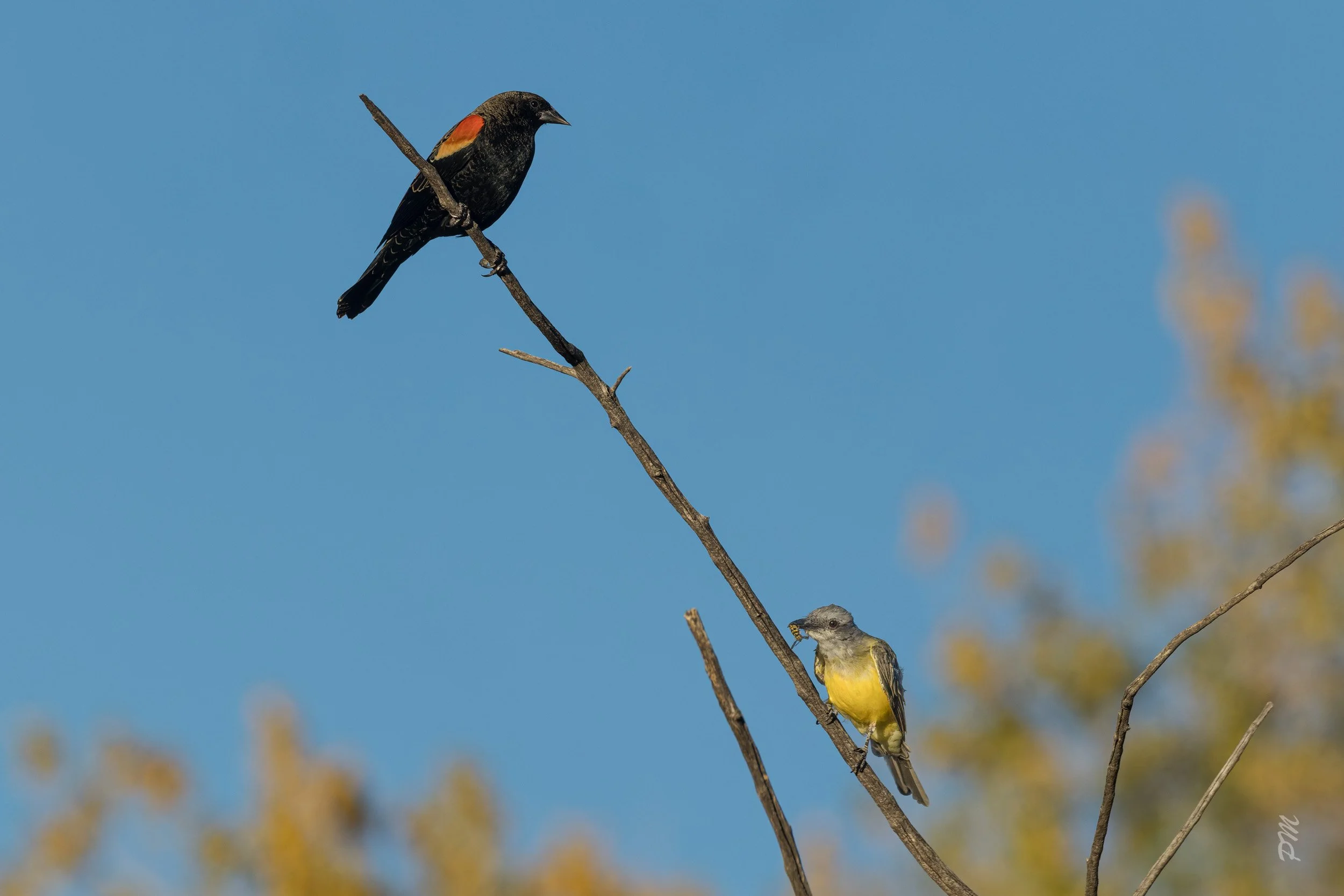
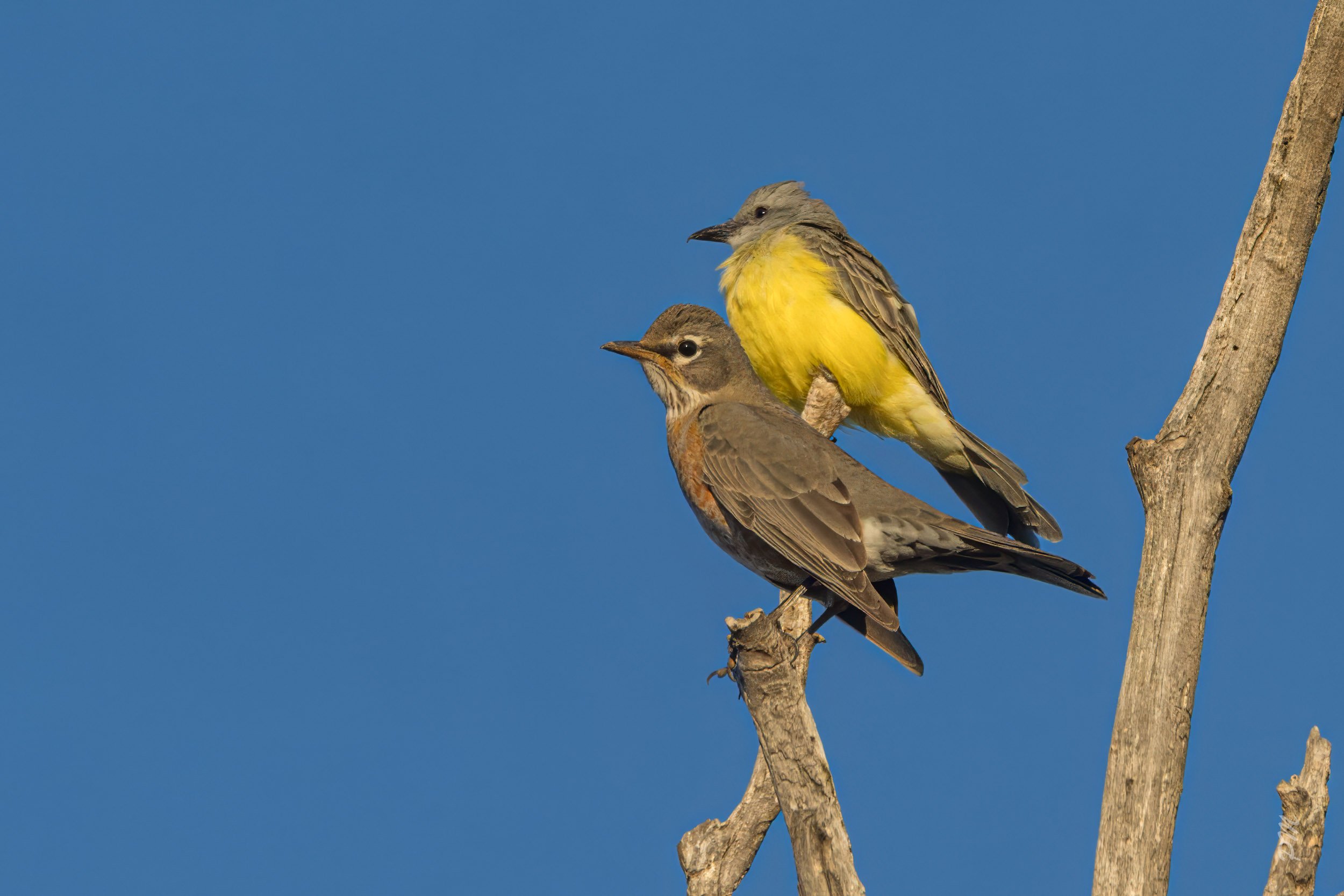
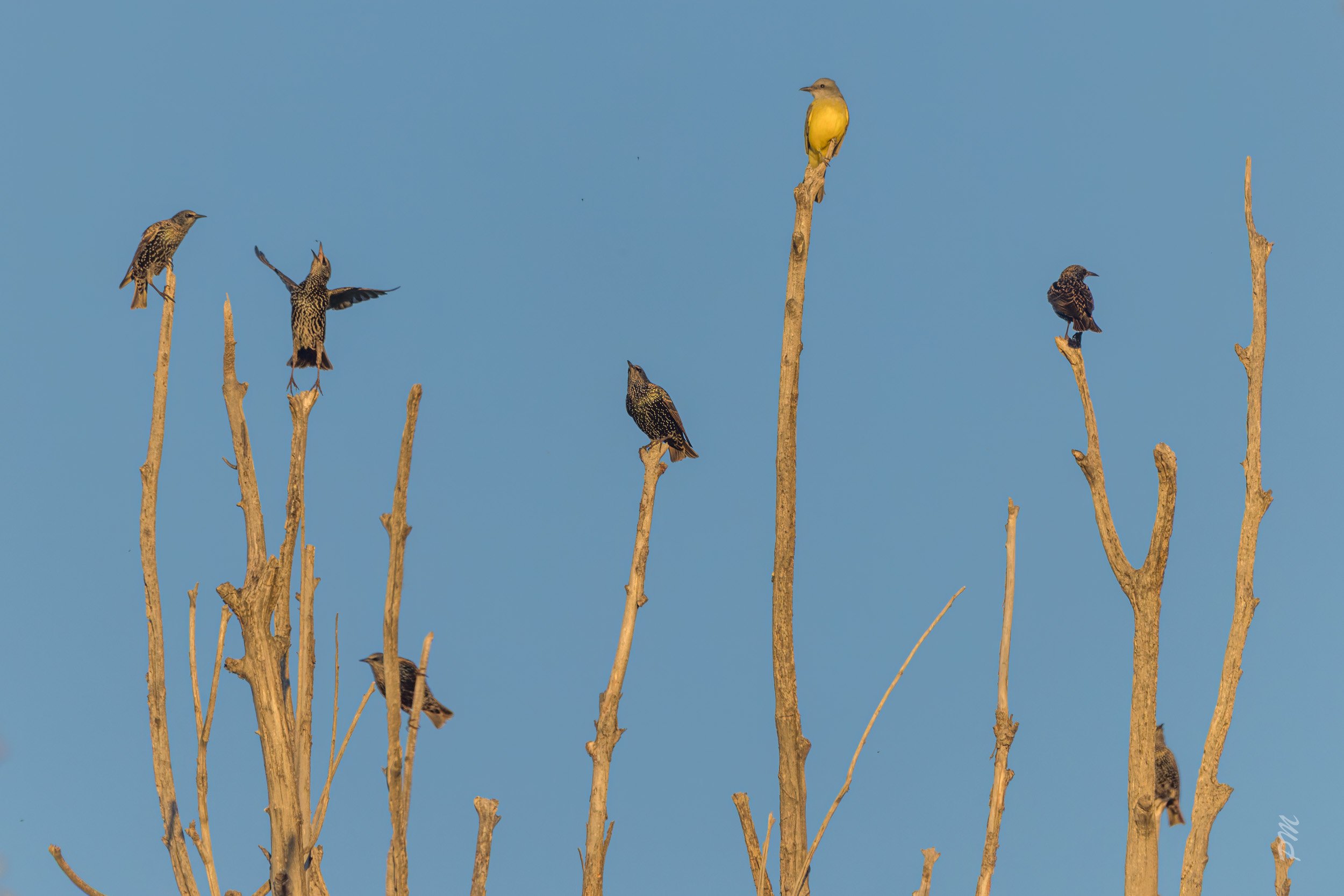
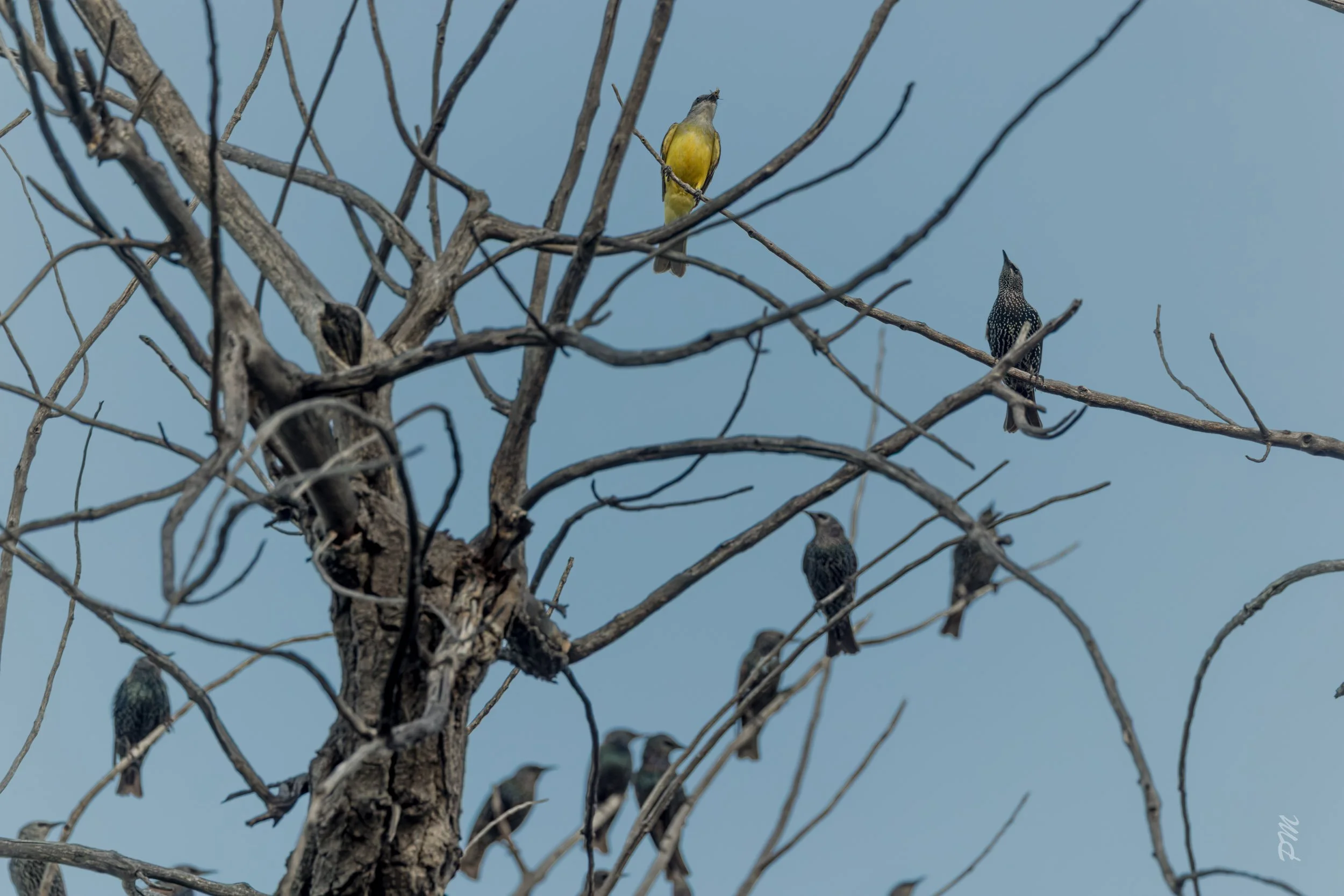
No one knows for sure why it’s here – caught in a storm’s wind is usually a default guess. Its northernmost range is the very southern tip of Texas (that would be the approximate 800-mile estimate), with the southern part of the range Belize, a country immediately south of Mexico (that would be the approximate 1,800-mile estimate). No one knows how long it will stay. It lives in the tropics. Colorado winters, which we are about to experience, aren’t the bone-chilling cold winters of the Upper Midwest, but we aren’t exactly “sipping a pina colada on the beach weather” here either.
Above - Couch’s Kingbird and European Starling. Note the Starling is lunging for one of the three bugs flying near it.
I admit I have been obsessed with it during its stay. So much so that I have started working on a “mini documentary” video that I hope to post to You Tube in a few months.
I wonder sometimes – the last time I saw Lewis was right before I saw The King. Could they have crossed paths in flight? If so, did they exchange notes? So much joy they have brought to a lot of us – and so much mystery, proving that Mother Nature is still the best mystery story writer ever.
Feel free to leave a comment or question below. I always enjoy reading/answering them!